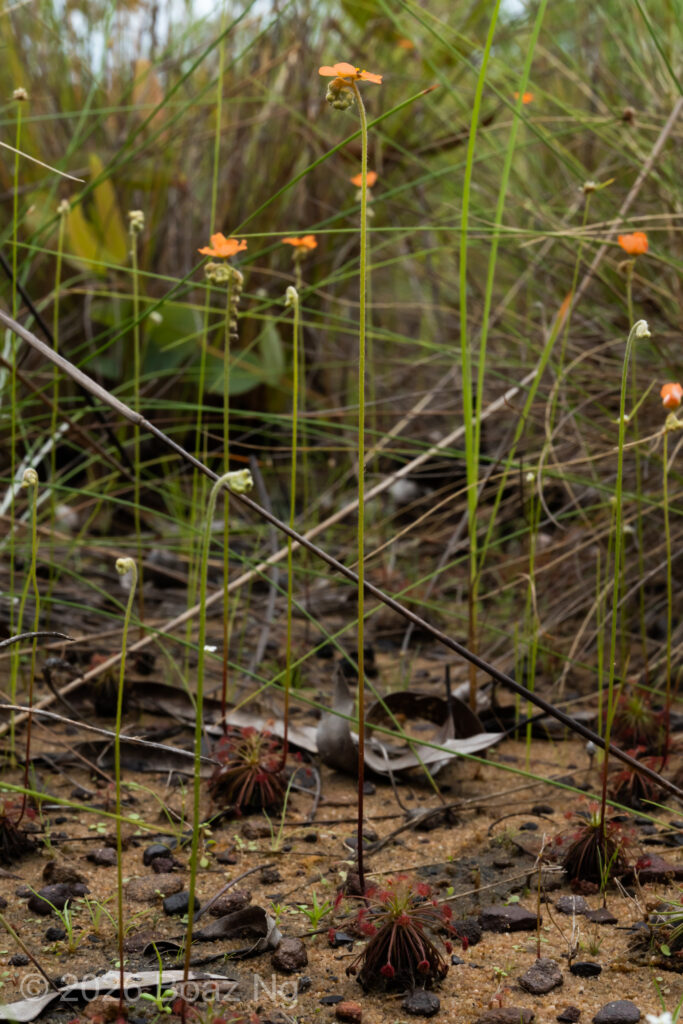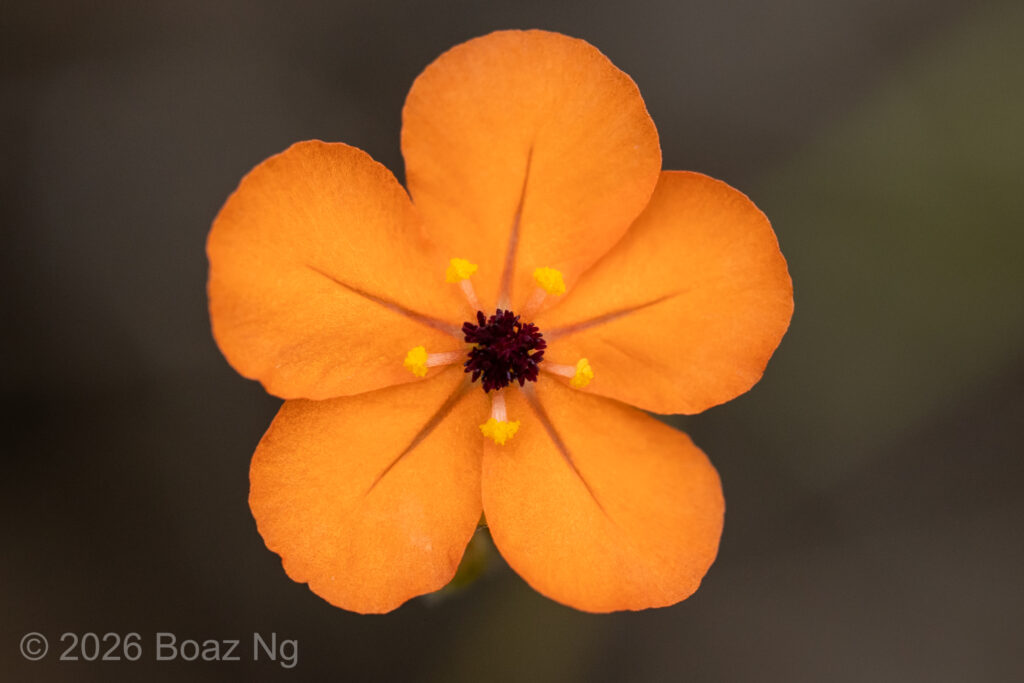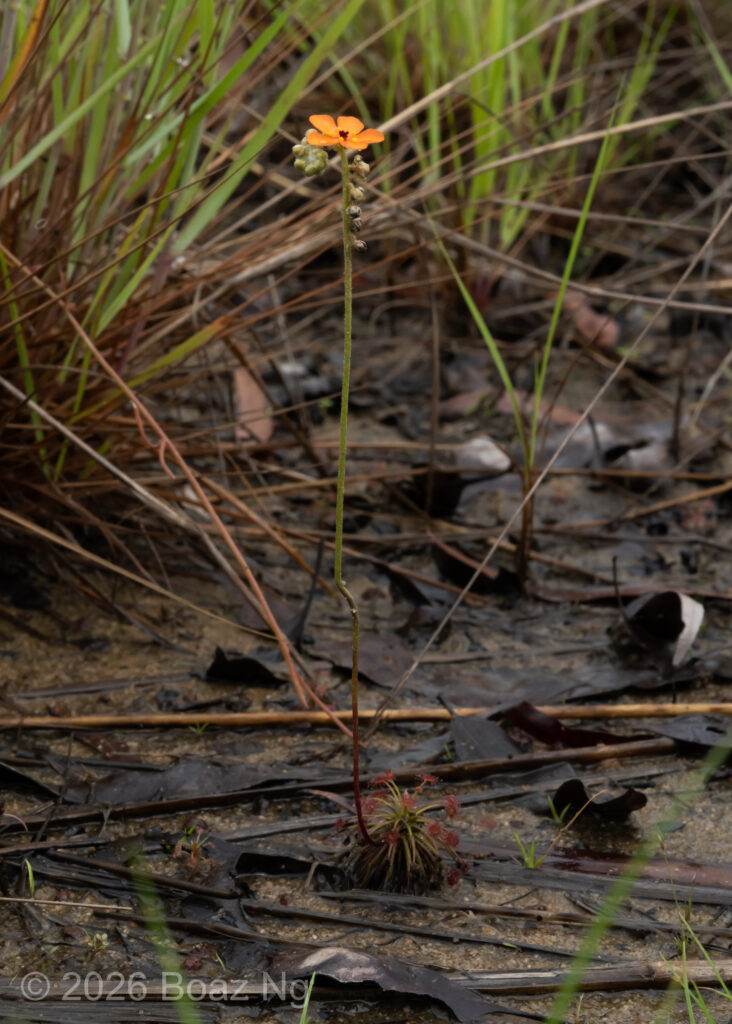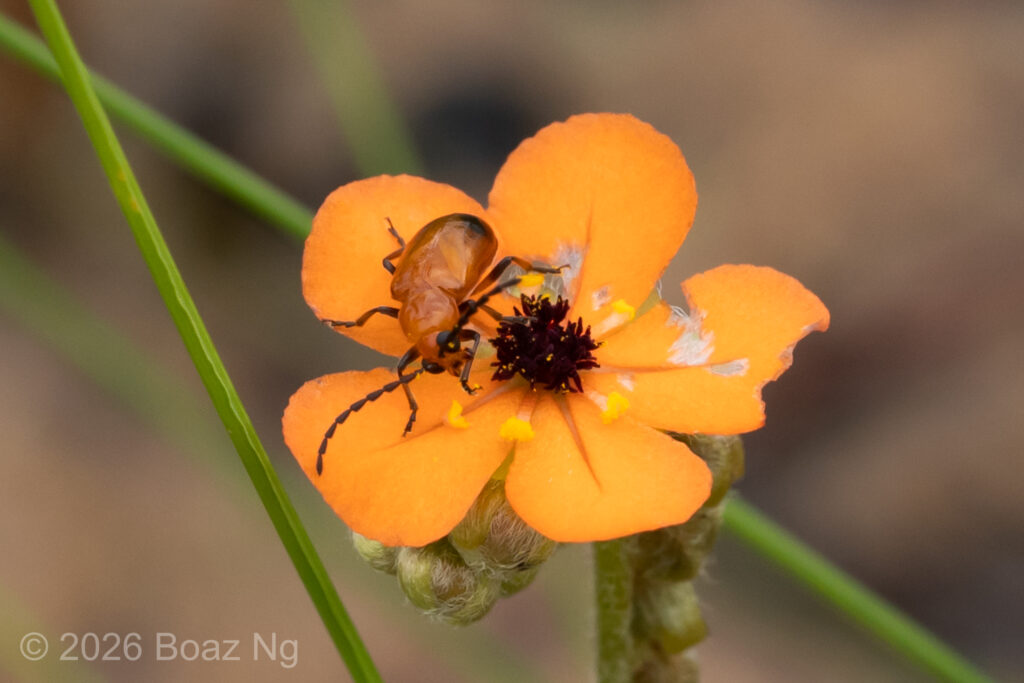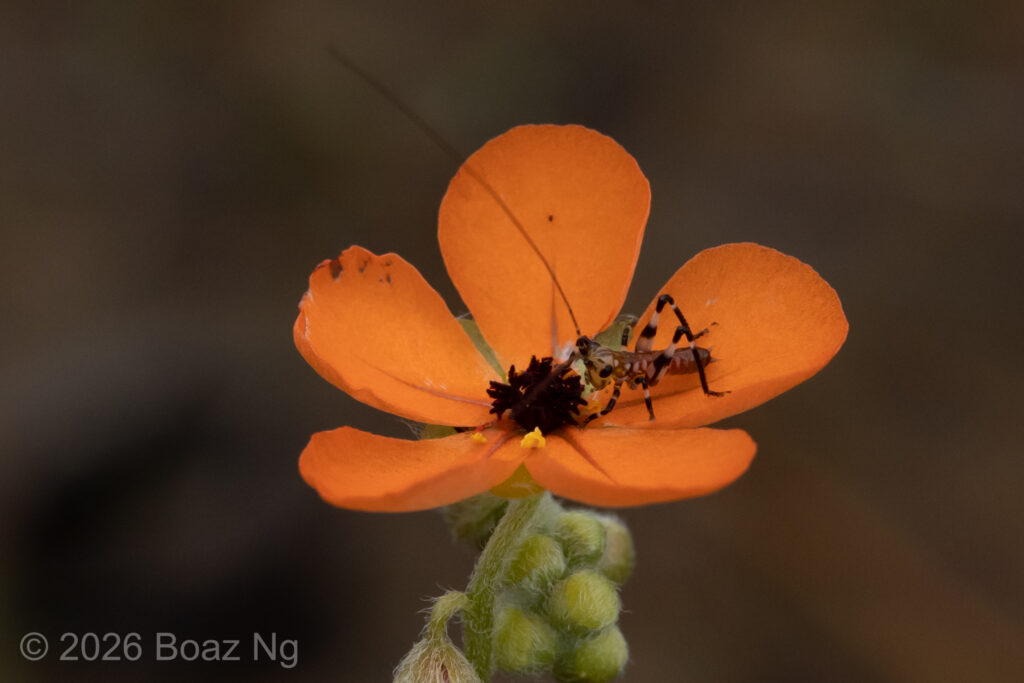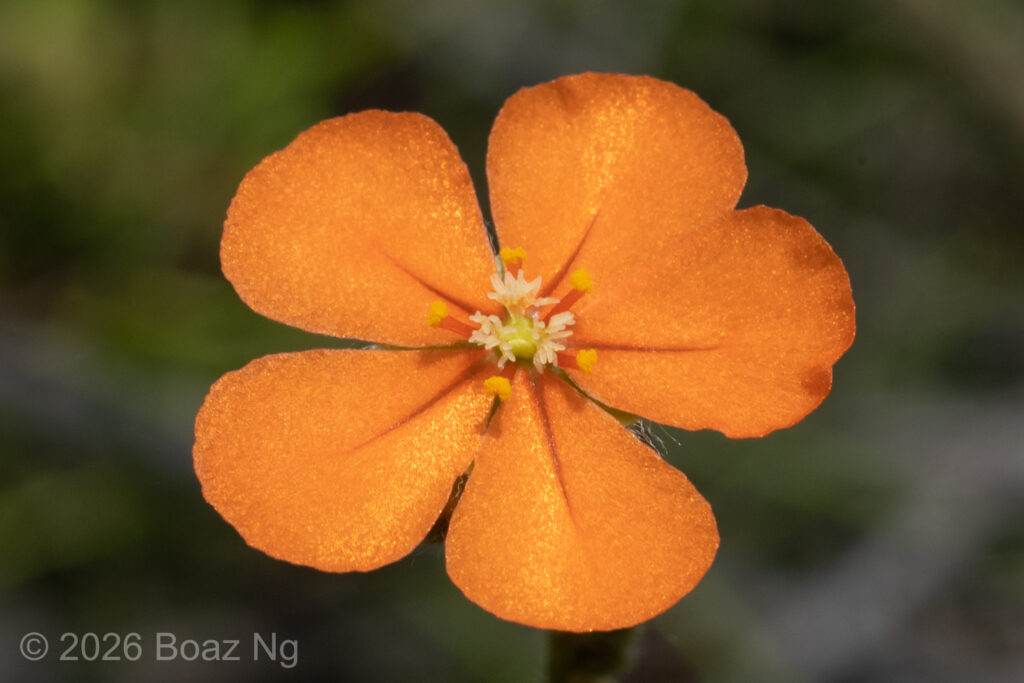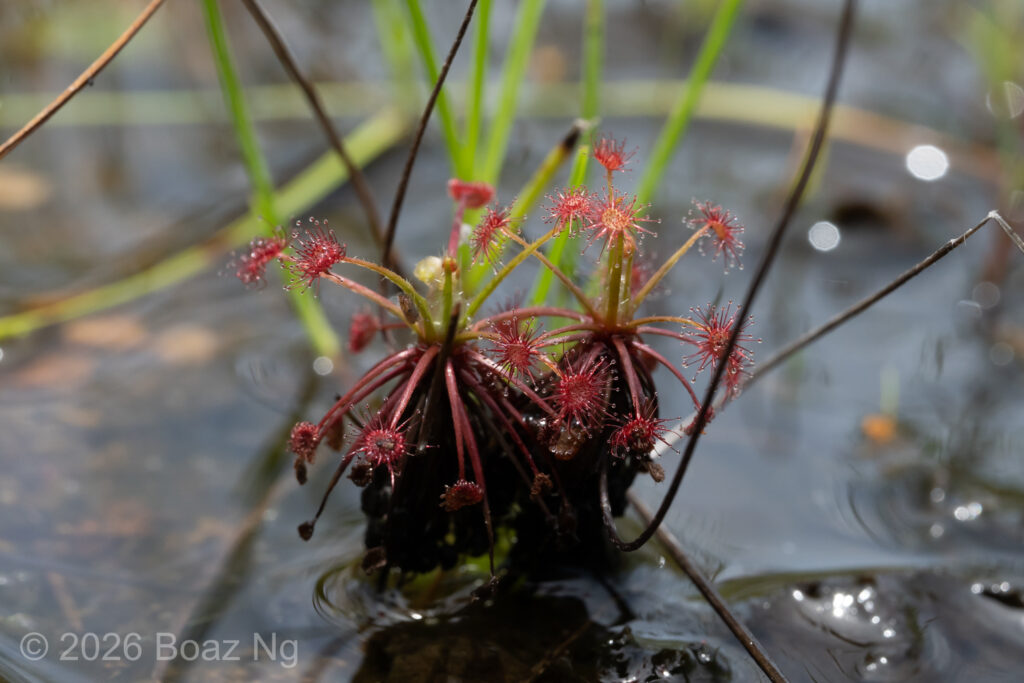
Drosera actinioides is a petiolaris complex sundew endemic to the northern Kimberley region in Western Australia. The species is named for its highly divided stigmas, which are shaped like Actinia sea anemones.
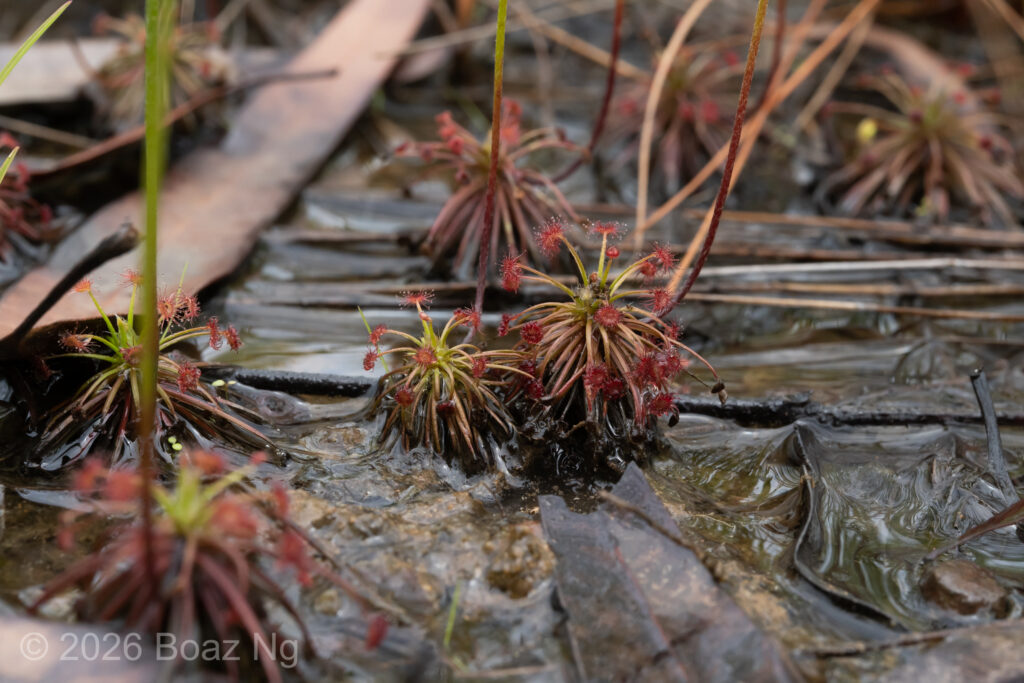
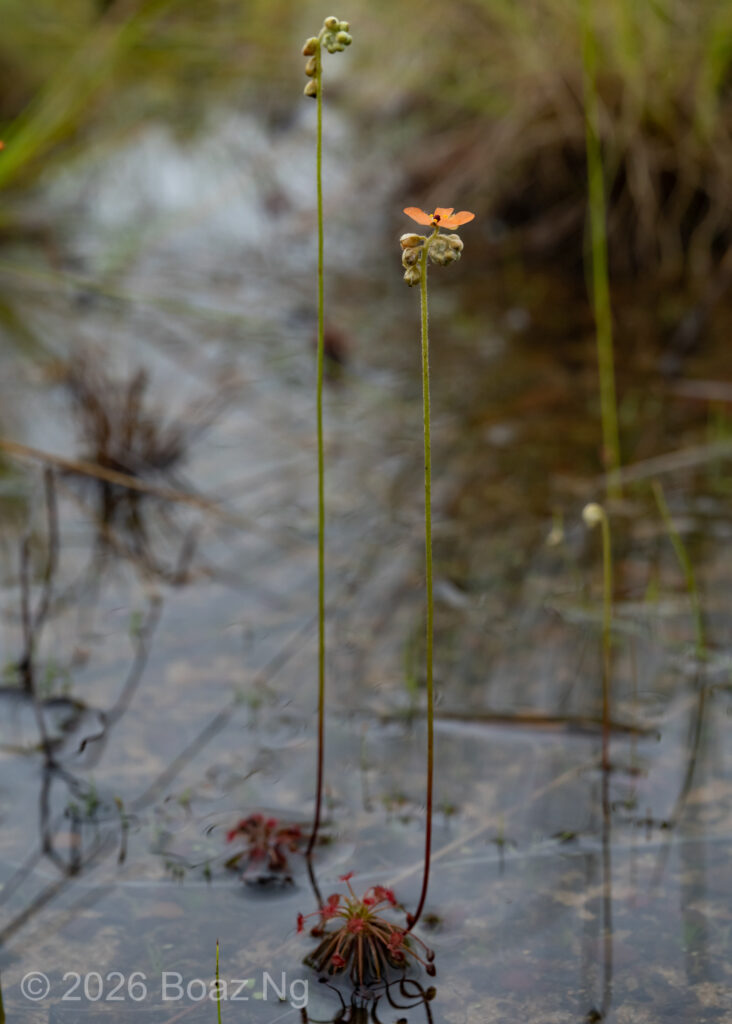
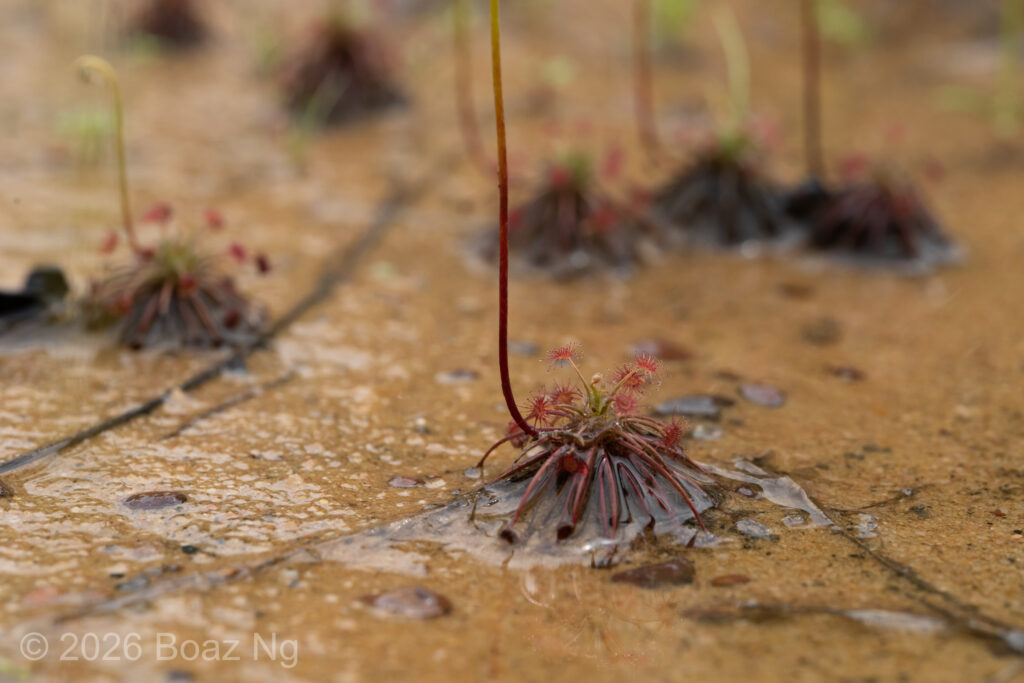
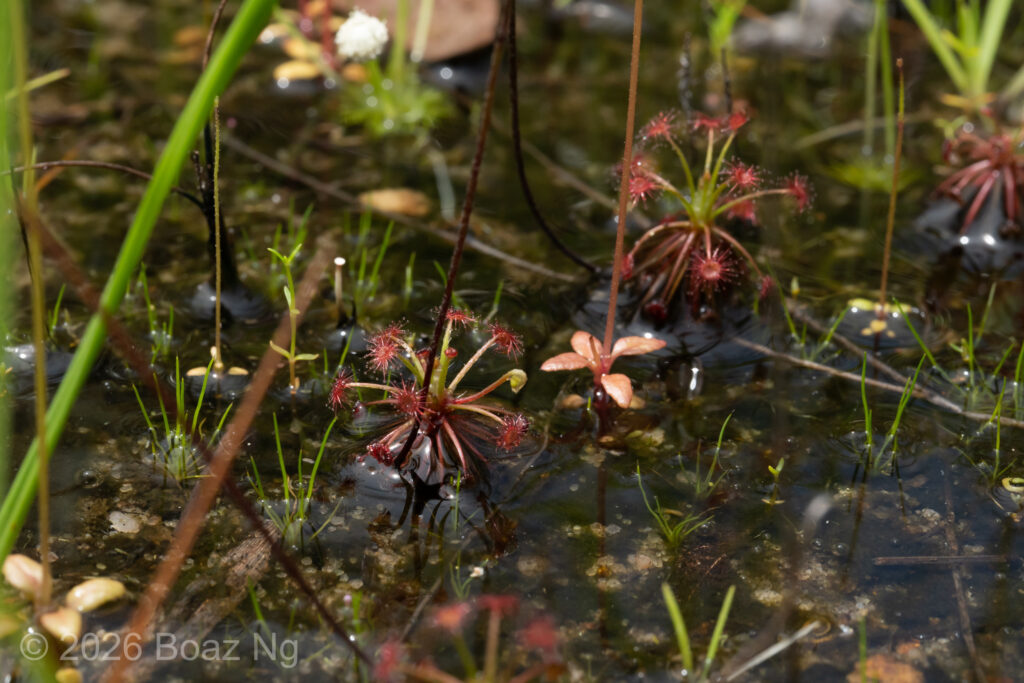
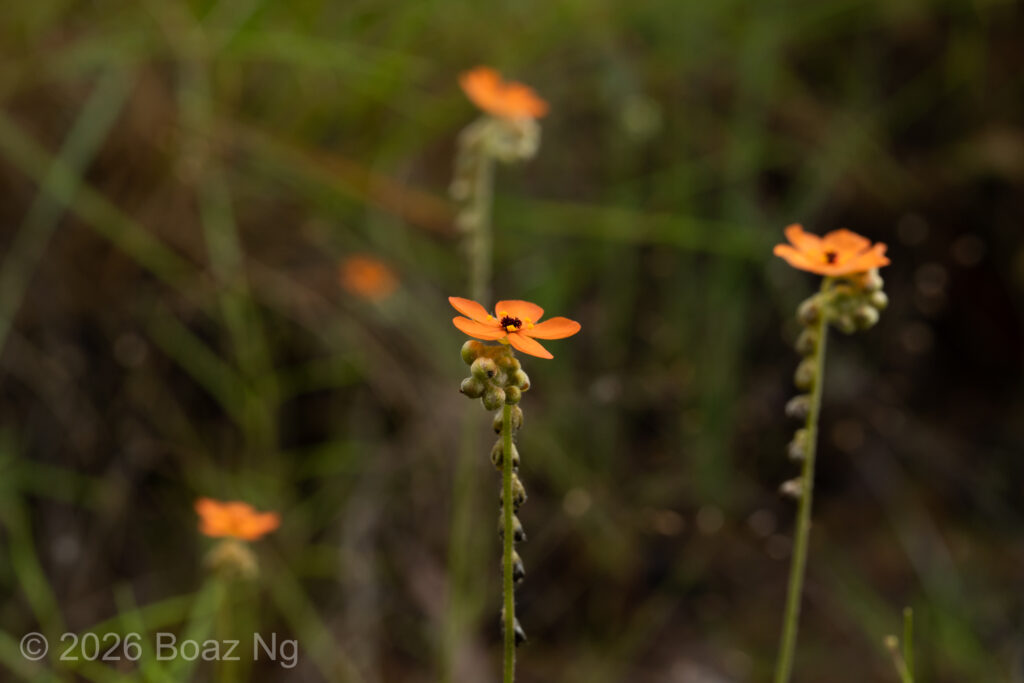
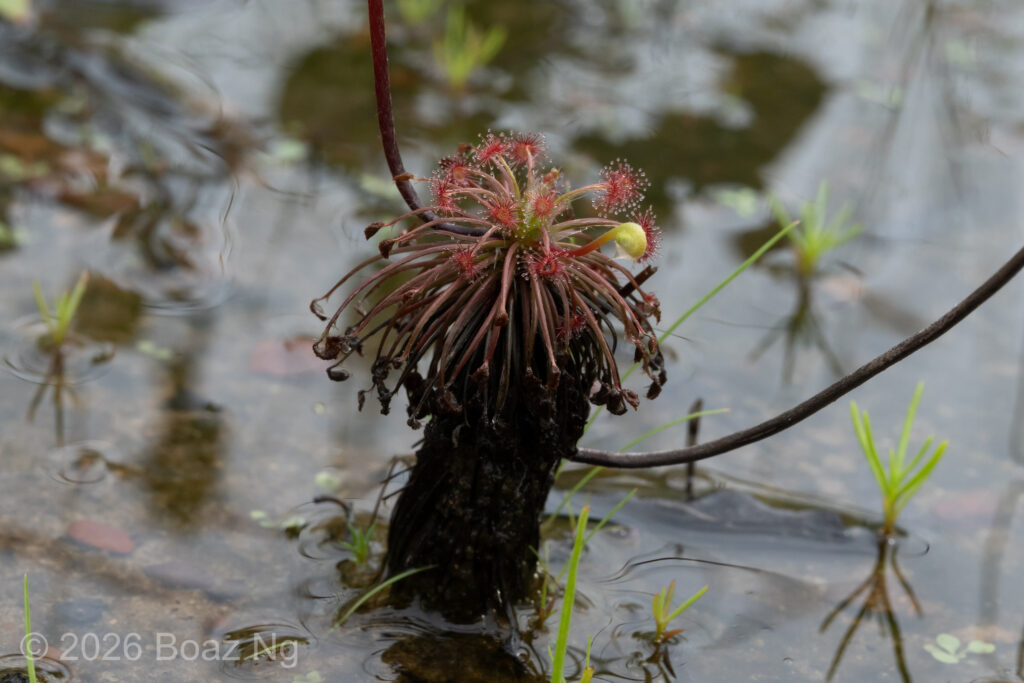
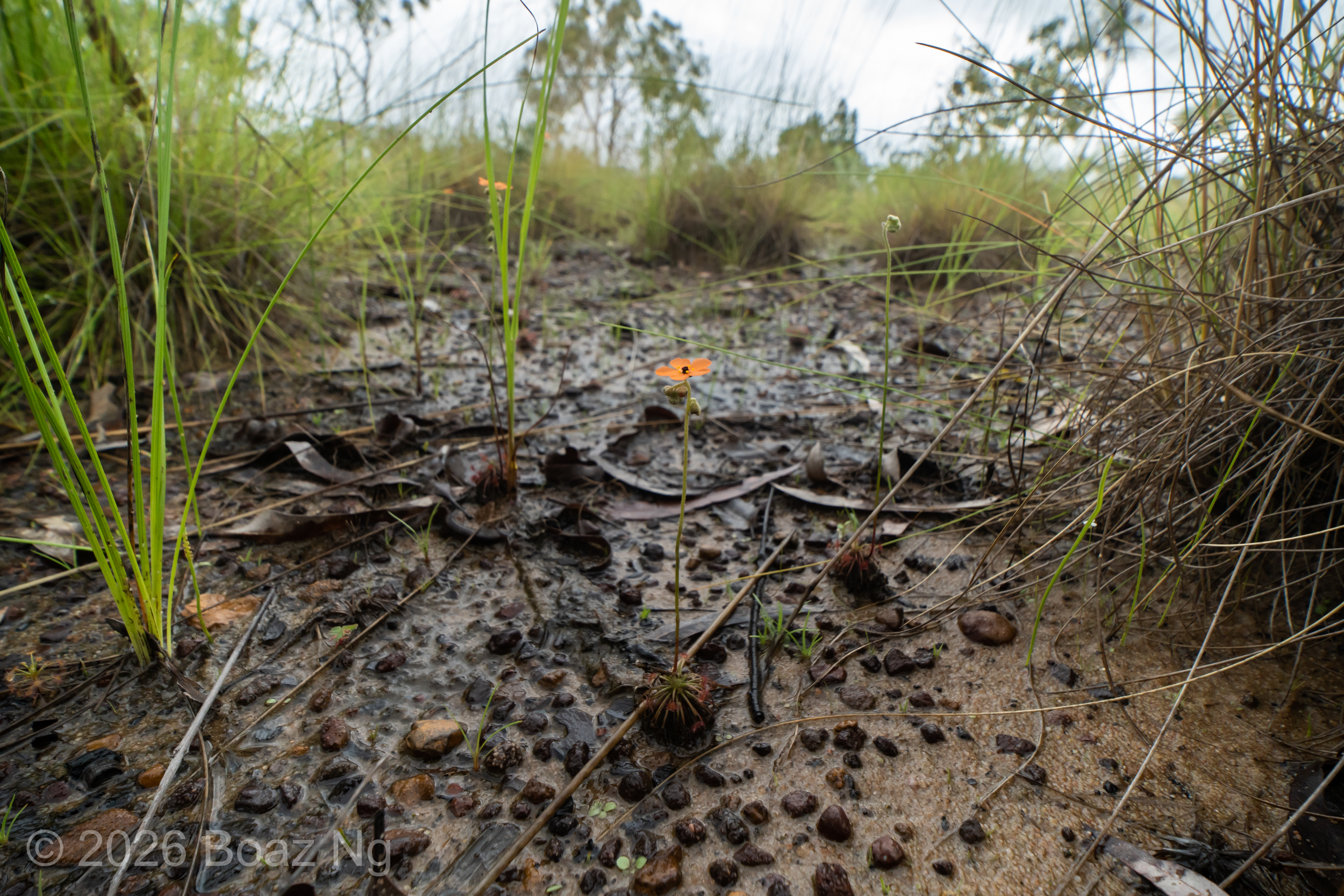
Drosera actinioides is a small sundew, with rosettes that reach 2-3cm in diameter. The leaves are numerous and semi-raised, with round laminae and long, thin petioles. There are spiky stipules at the base of the leaves. The flowers are metallic orange, reaching around 1.5-2cm in diameter. The styles are blackish red, forming stubby, fleshy, highly divided clusters. Some populations have white styles. The pedicels are pendulous when in fruit. The flower scape is long, reaching around 30-50cm tall, and is coloured dark red near the base.
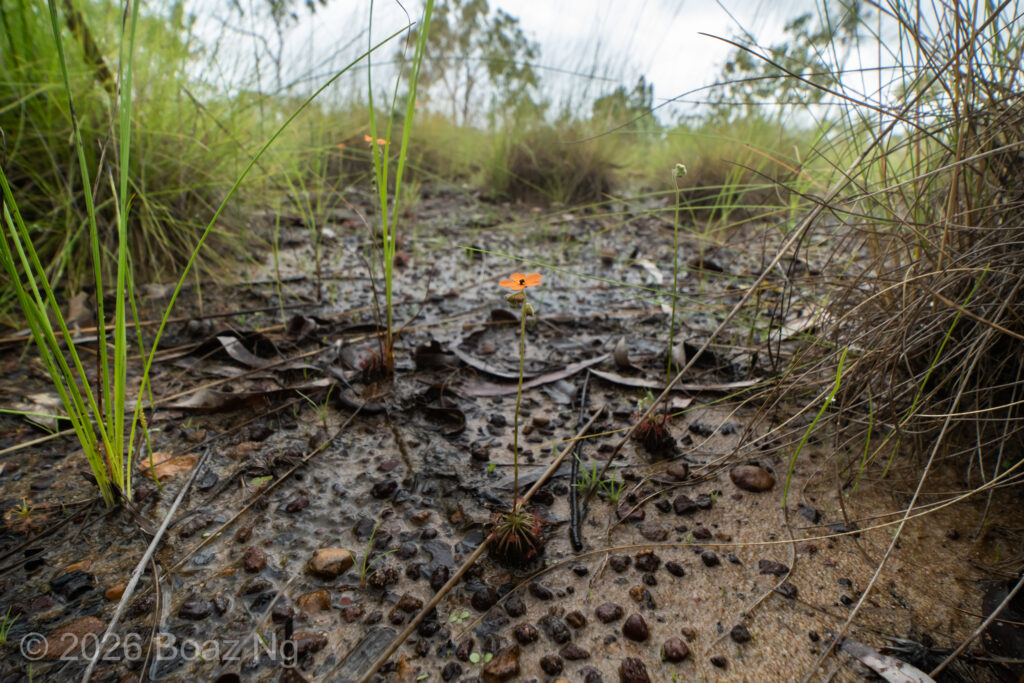
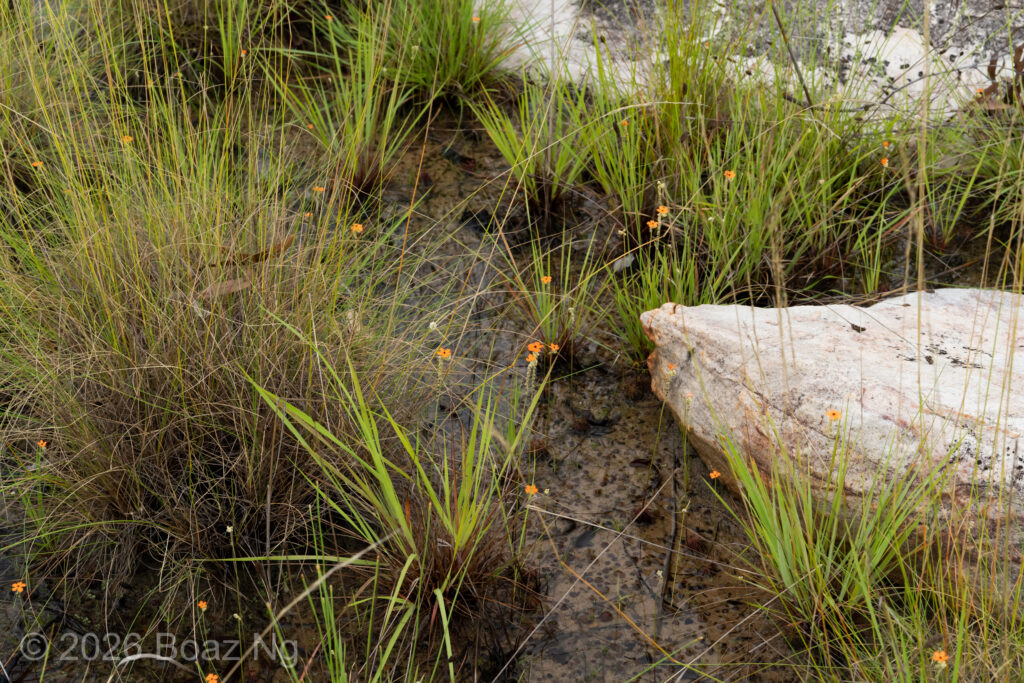
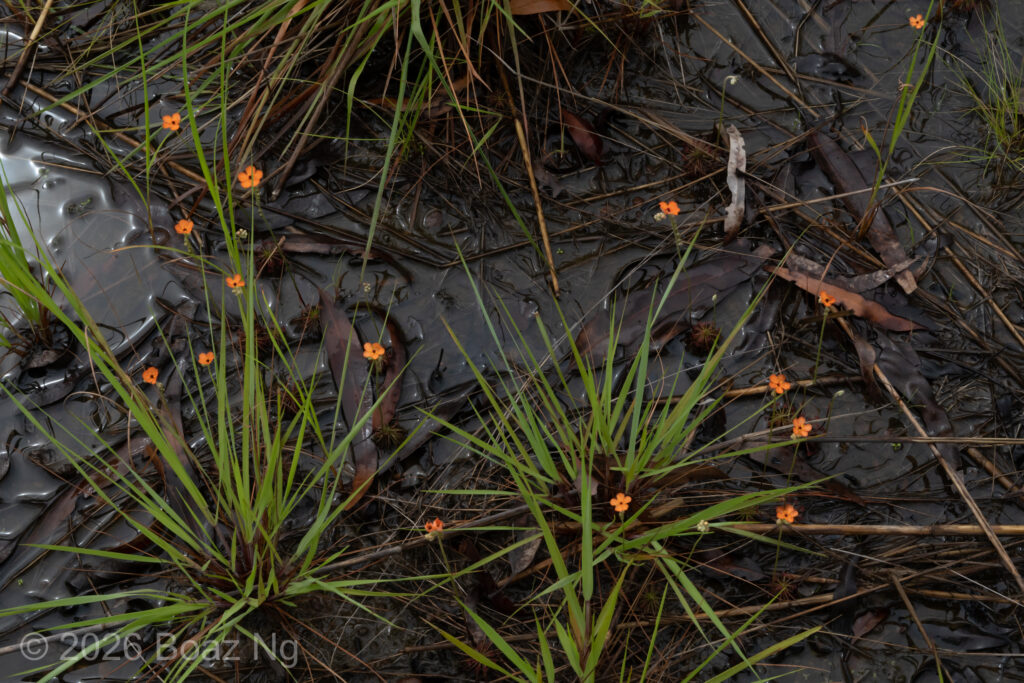
The species is known from coastal areas north of Kalumburu and around Napier Broome Bay. It tends to grow in sandy substrates within exposed, seasonally wet ironstone fields as well as gravelly seeps near sandstone outcrops. These habitats dessicate during the dry season. The plants generally grow as annuals but may persist as perennials in wetter niches.
Drosera actinioides is similar to other sundews in the Drosera paradoxa complex, which are united by their thin, semi-raised rosettes. In nature, it grows alongside a taxon known as D. aff. paradoxa ‘swamp form’, which shares similar morphology and proportion. It is readily distinguished from all other petiolaris complex sundews by its orange flowers and fleshy, clustered stigmas.