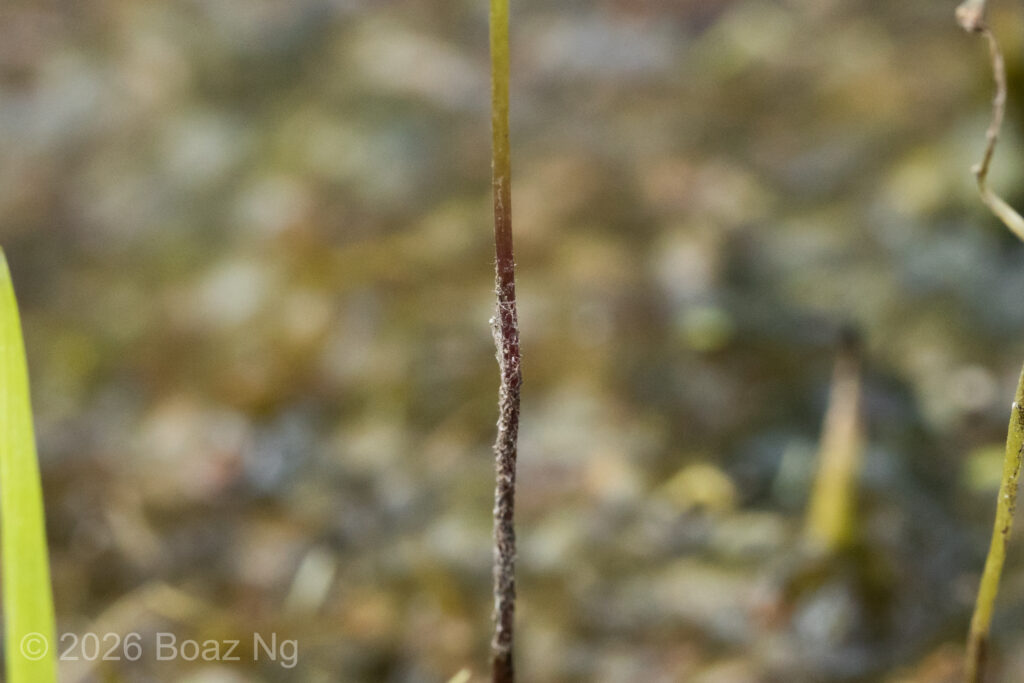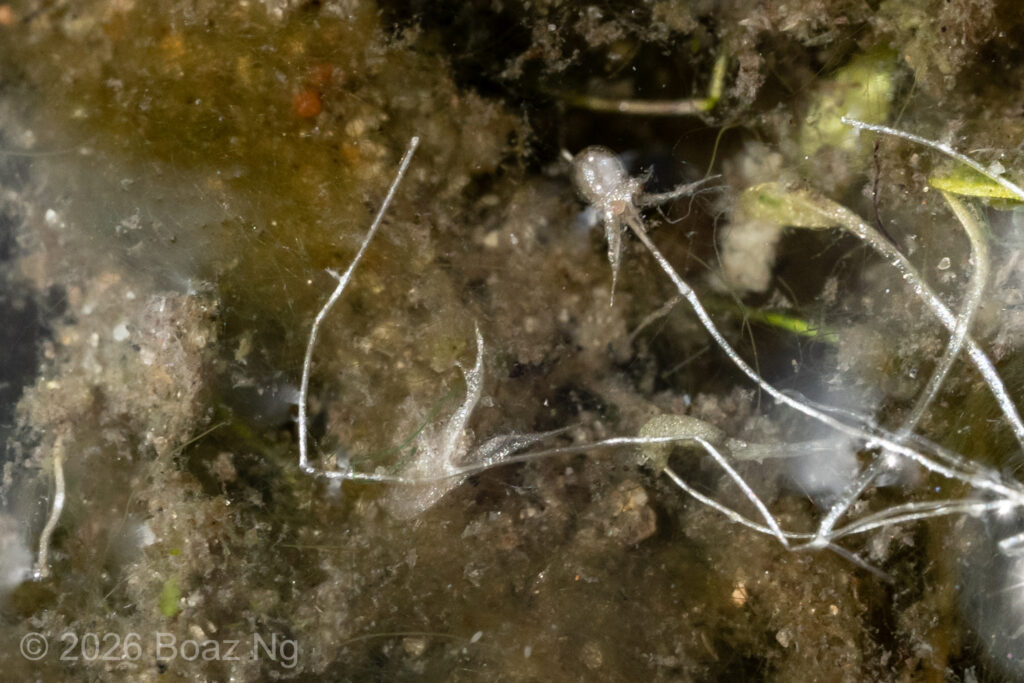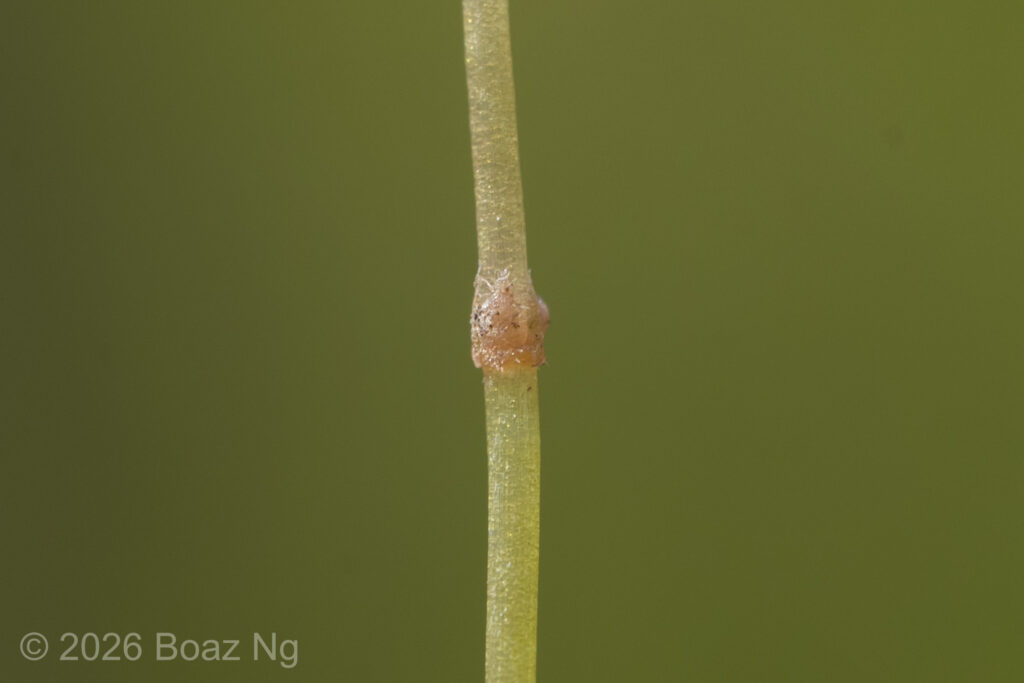
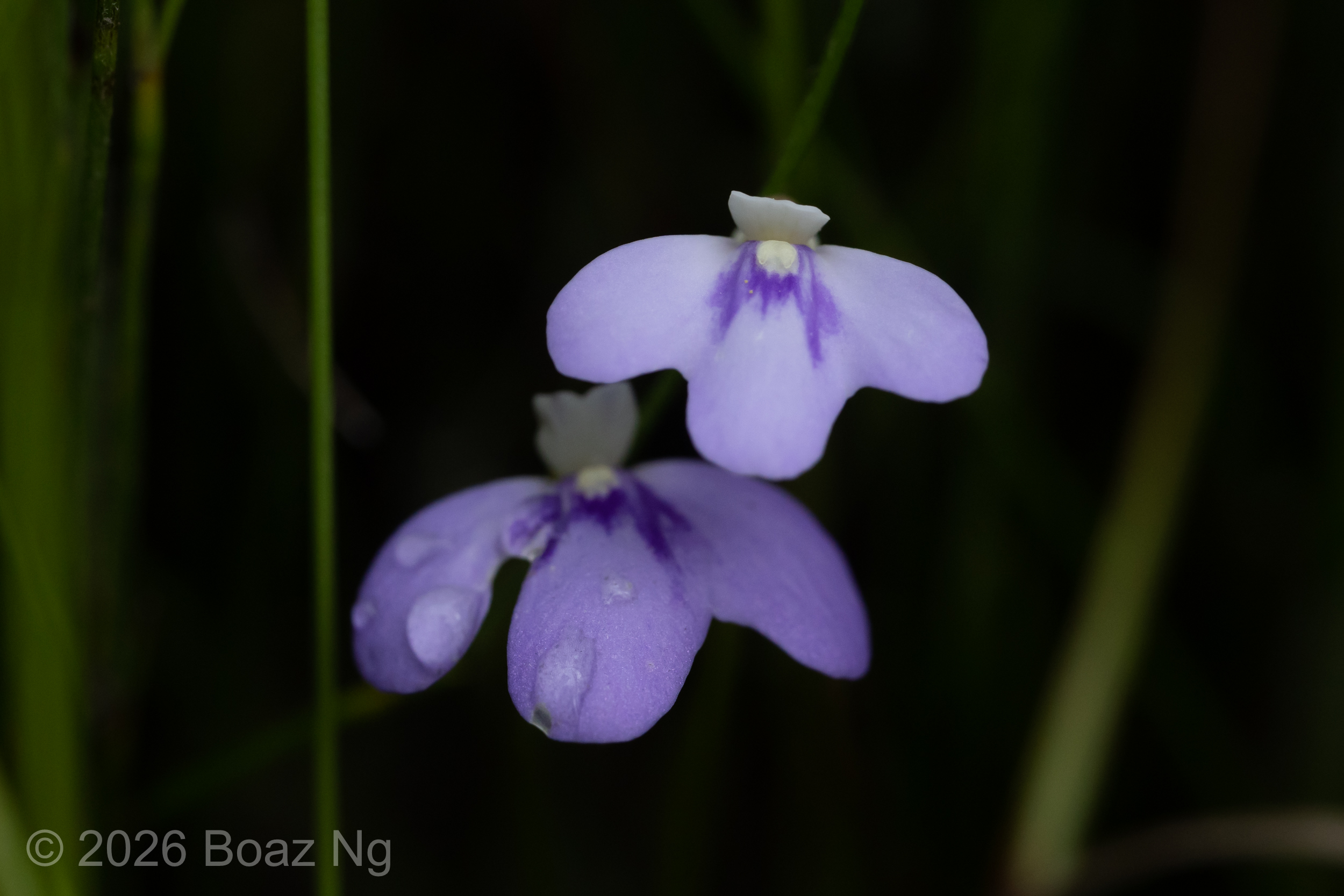
Utricularia disjuncta is a species of bladderwort endemic to the Northern Territory, Australia. The species is named for its sporadic distribution in Darwin and Bing Bong.
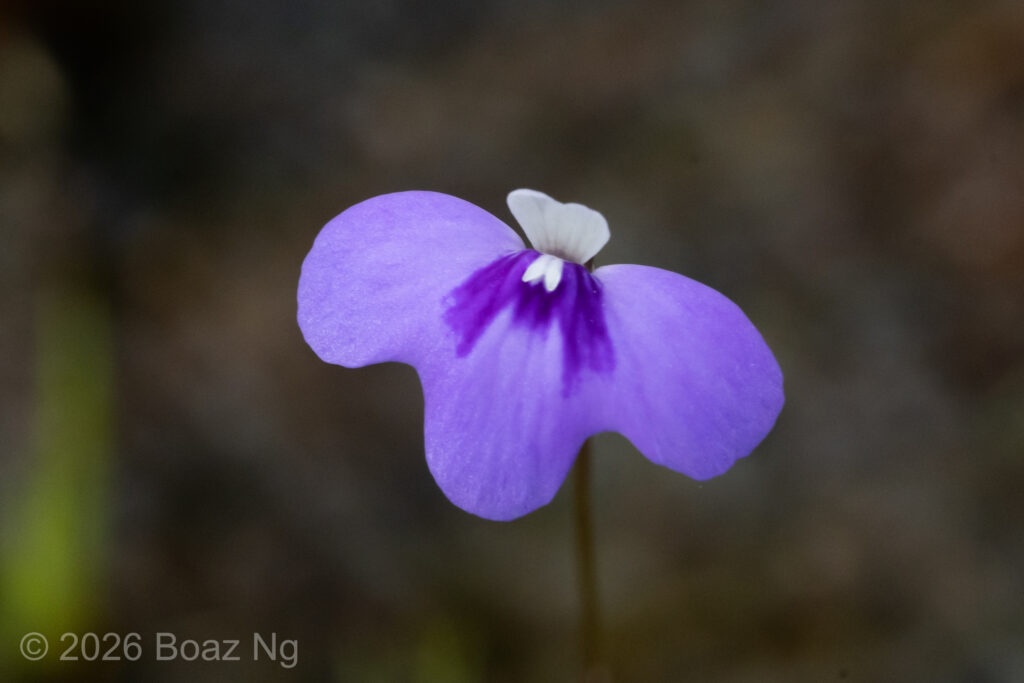
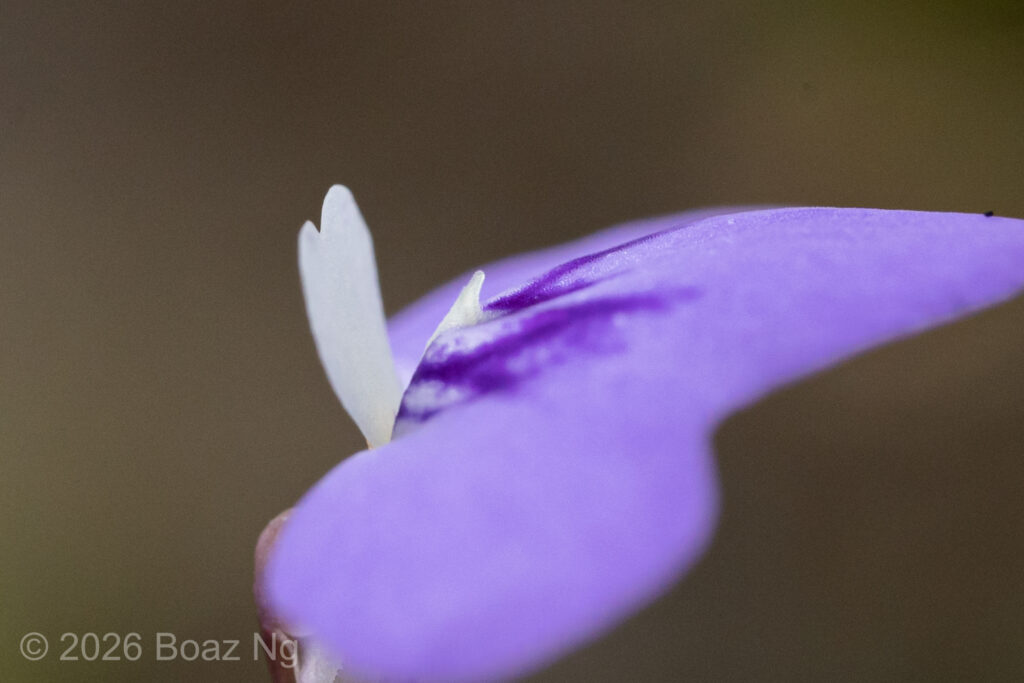
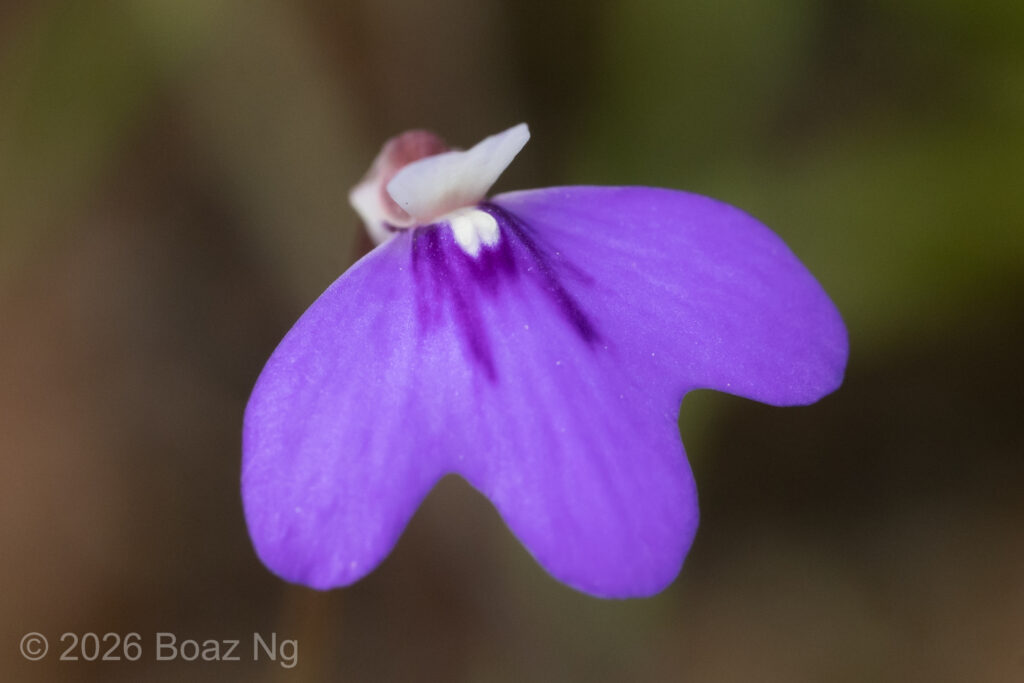
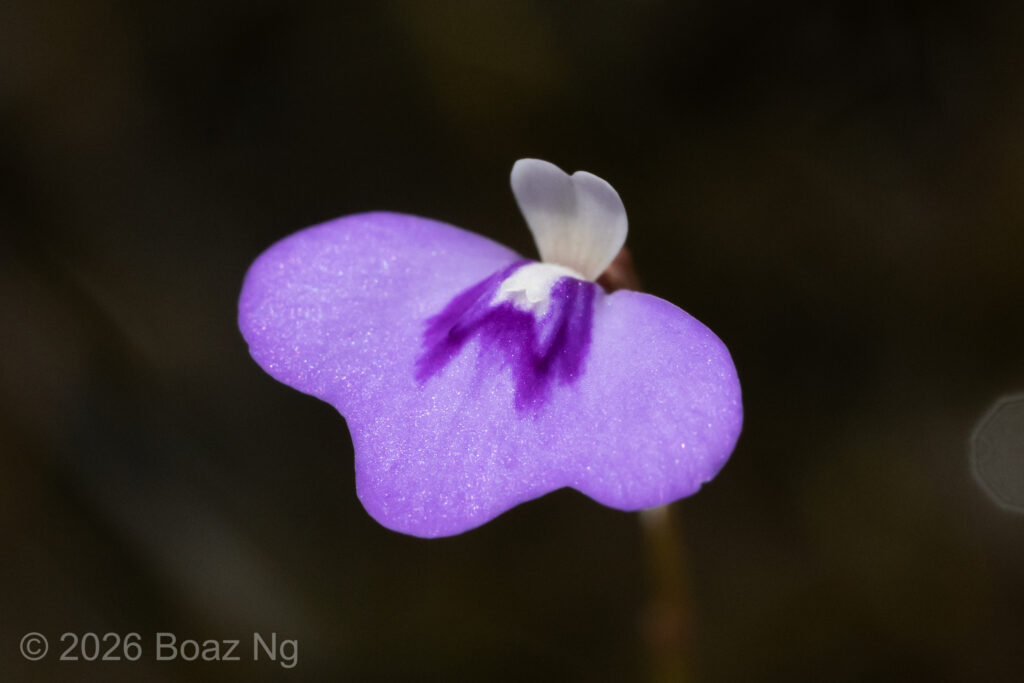
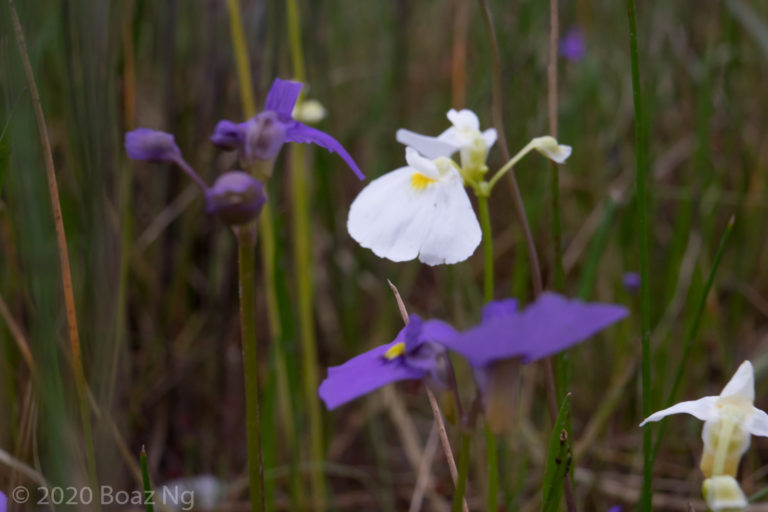
Utricularia disjuncta is a small bladderwort with blooms around 1-2 cm in width. The lower corolla lip is flared with three distinct, rounded lobes. The upper corolla lip is smaller and upright, often with a notch at the edge. The palate has two raised white ridges, each terminating with a toothed projection. The front of the flower is purple and white, and the back is white in colour.
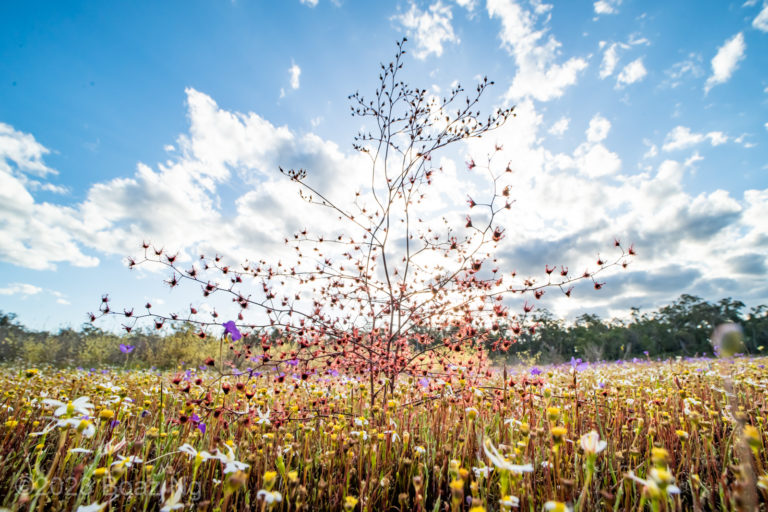
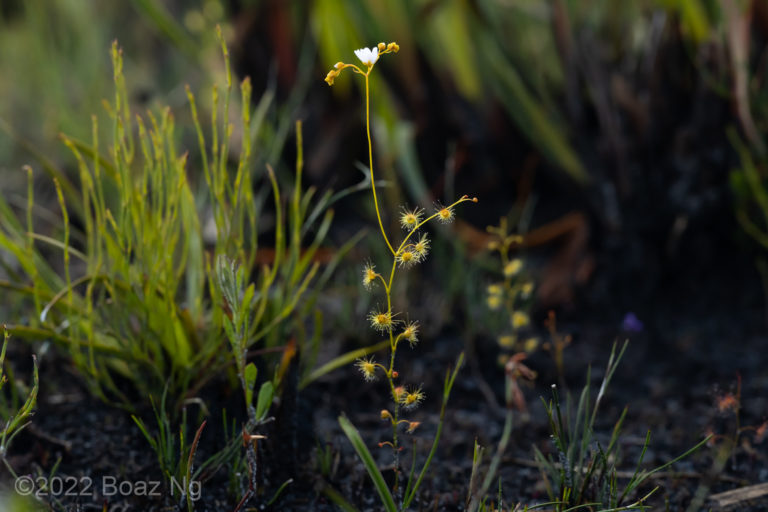
The species is found in the Darwin region, as well as Bing Bong in the Gulf of Carpentaria. In Darwin, it is usually observed in sand sheet habitat, often where water begins to seep out of the ground at the boundary between tall spear grass and short grass. The peak flowering time for the plant is during the later parts of the wet season, from around February until the substrate begins to dry out.
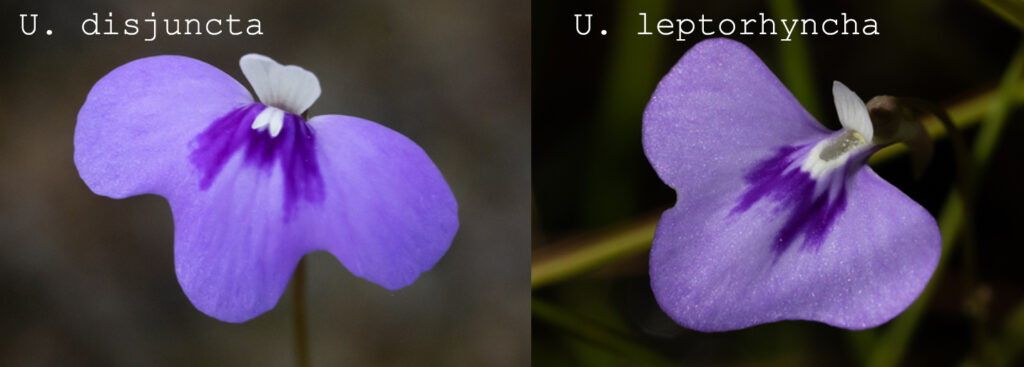
Utricularia disjuncta is often confused with U. leptorhyncha due to an identical colour scheme and similar corolla shape. The two species are easily distinguished by the palate at the centre of the bloom. The palate of U. disjuncta has two white ridges with a set of toothy projections. The opening to the flower is obscured. In contrast, U. leptorhyncha has shallow white ridges that surround a readily presented hole leading inside the bloom. Utricularia disjuncta is also morphologically very similar to the NT form of the closely related U. brennanii. It is distinguished by the white palate ridges and backs of the flowers (the ridges and backs are orange in U. brennanii).