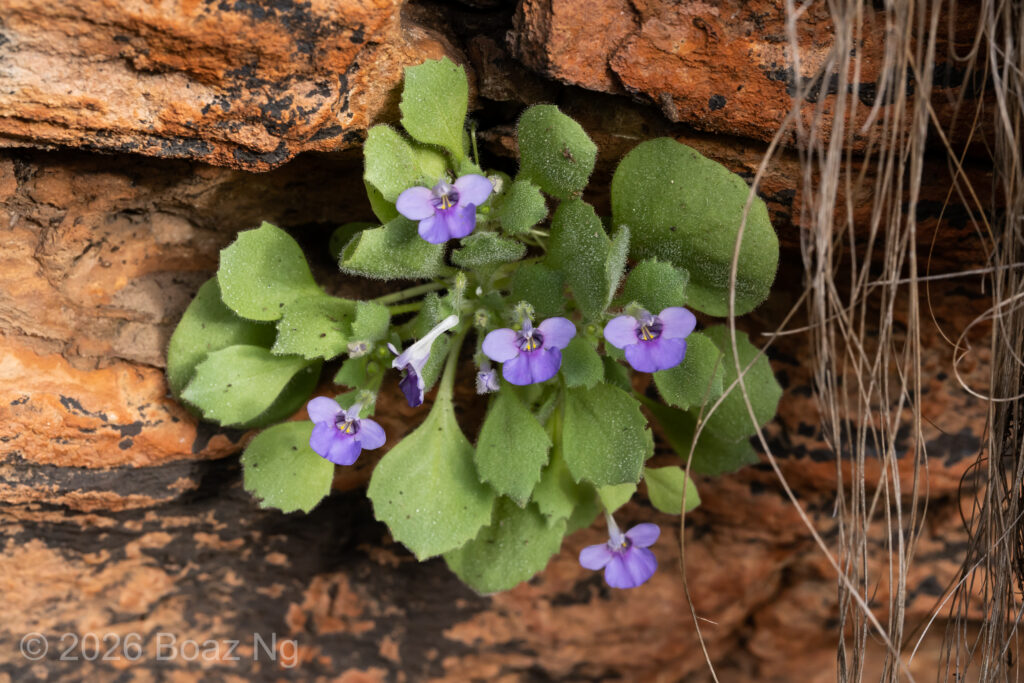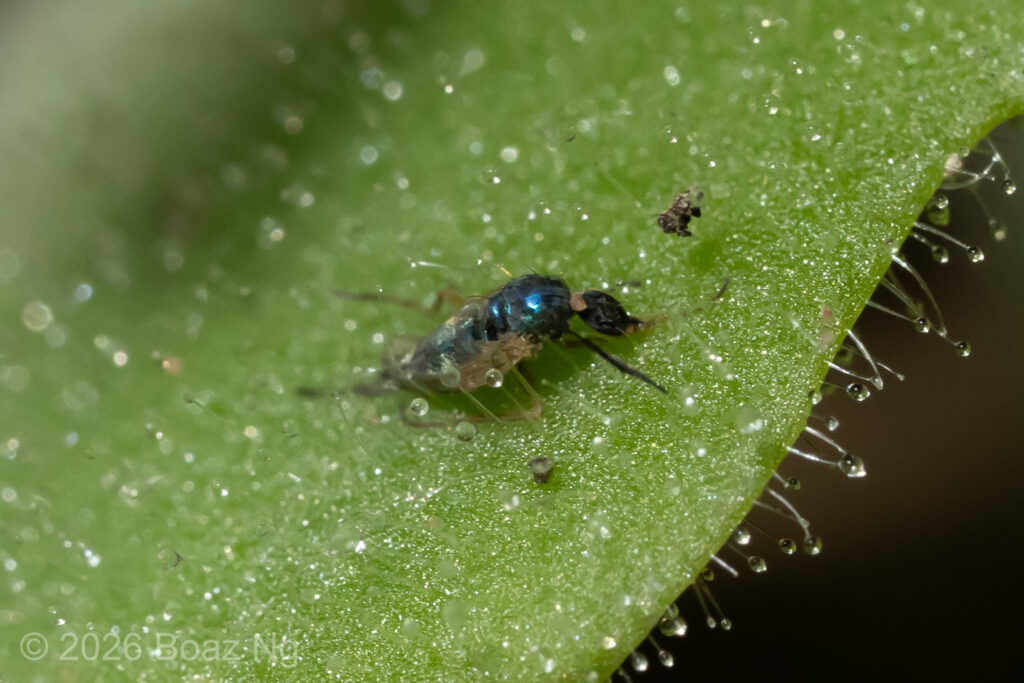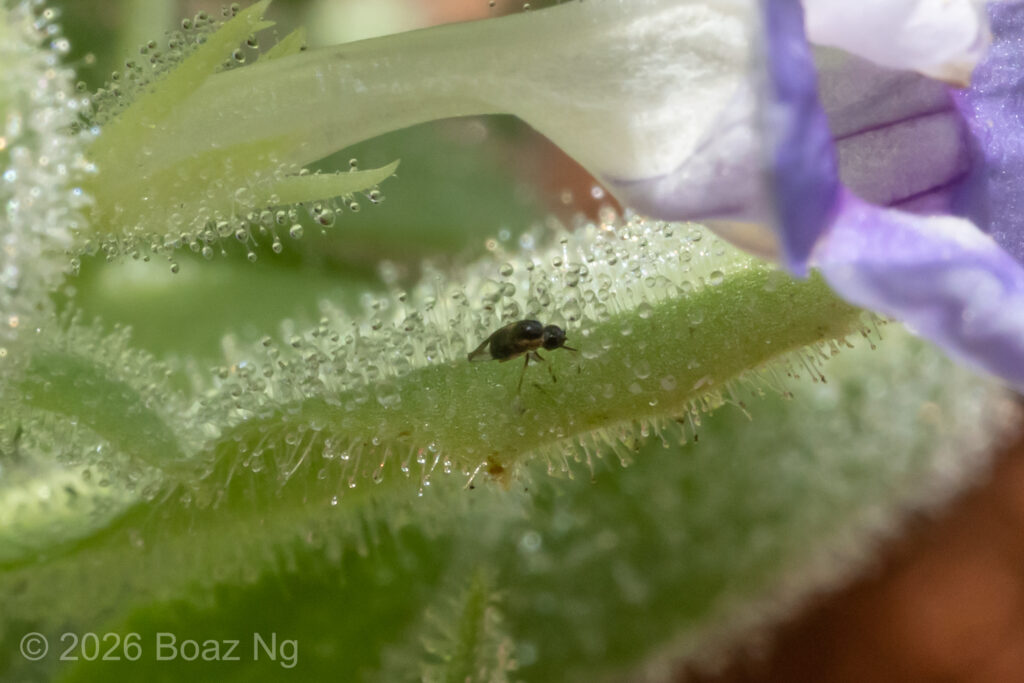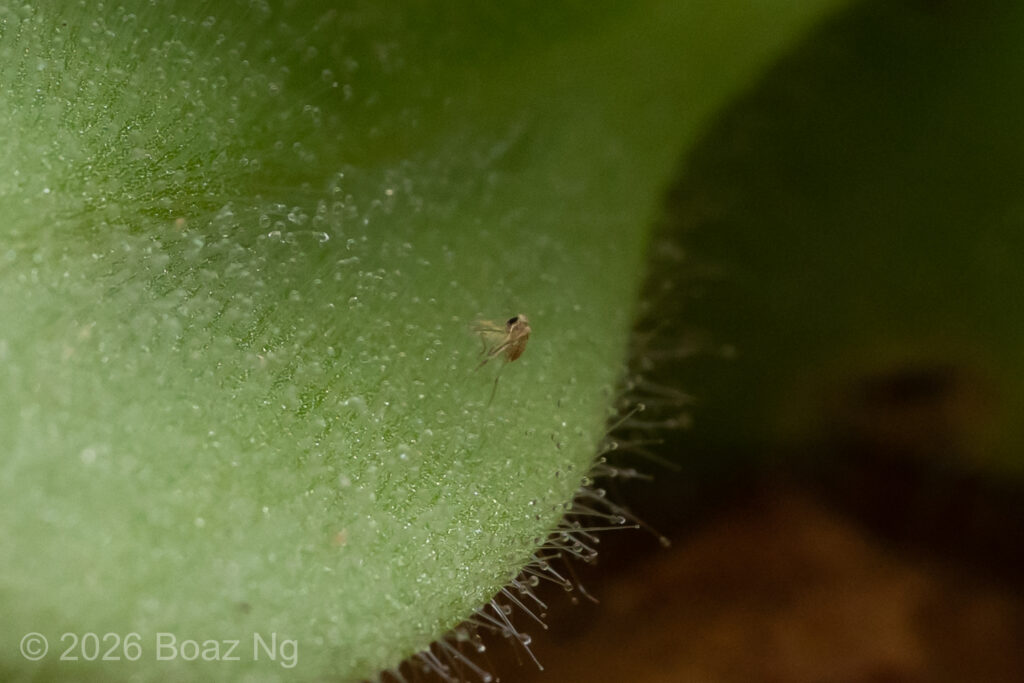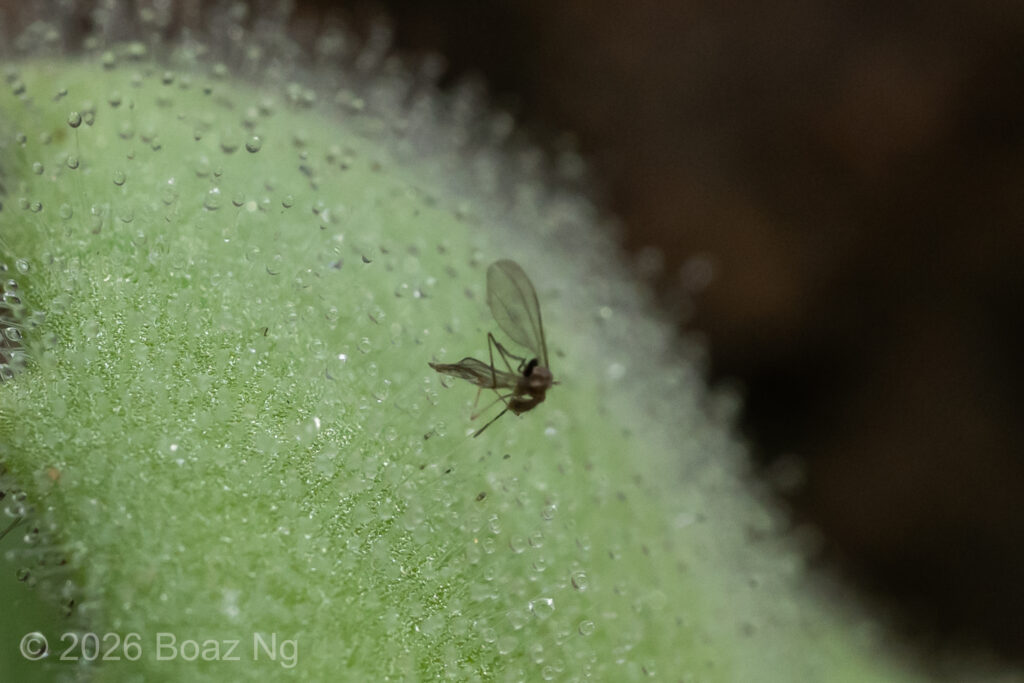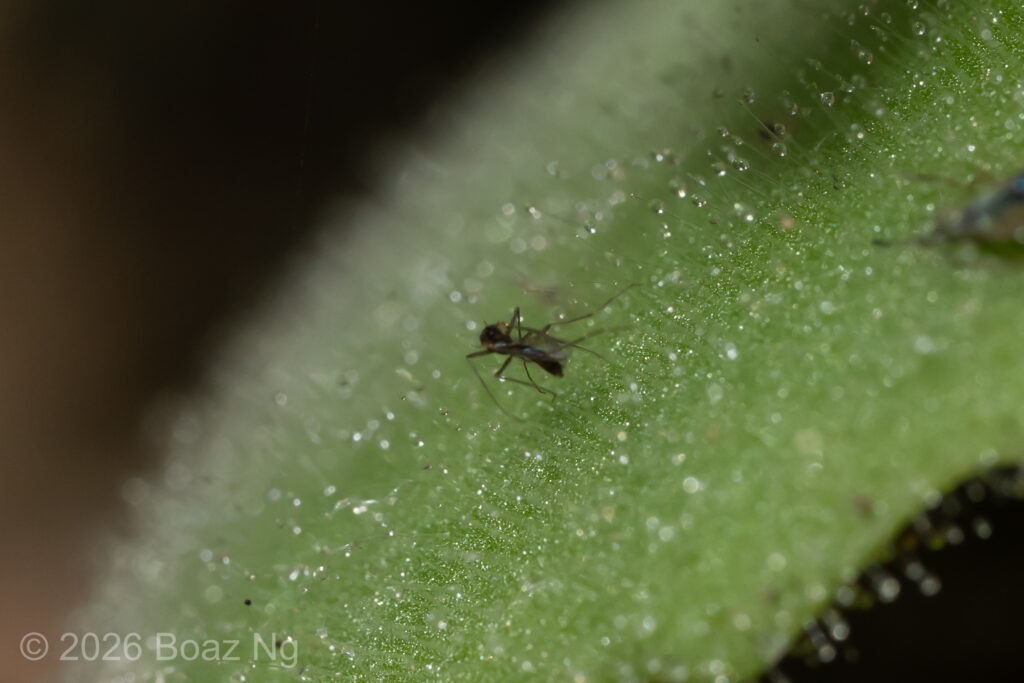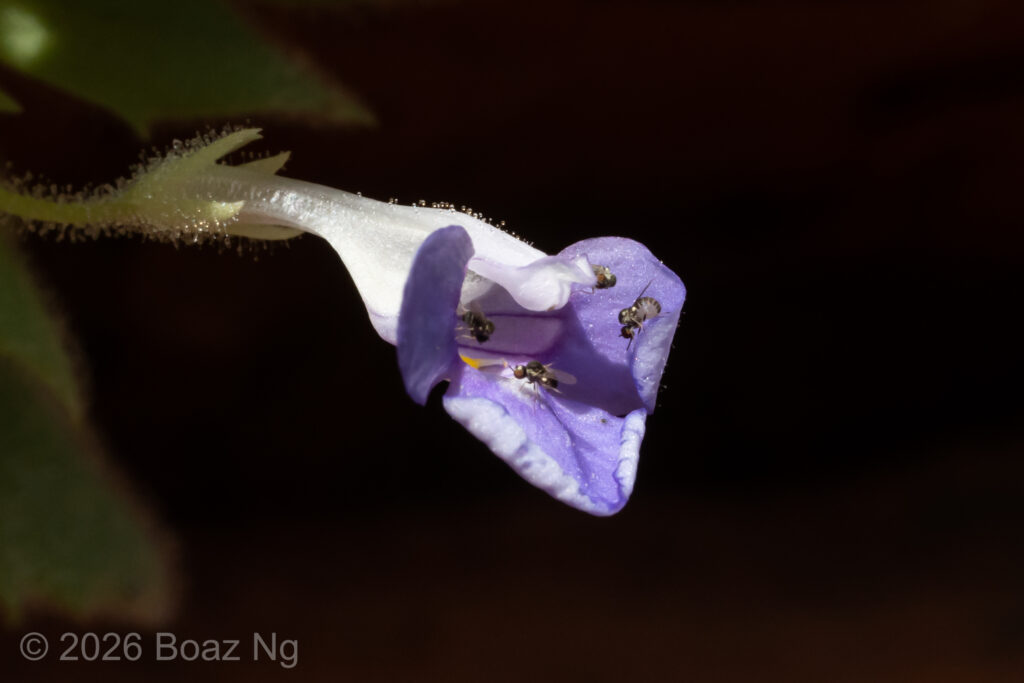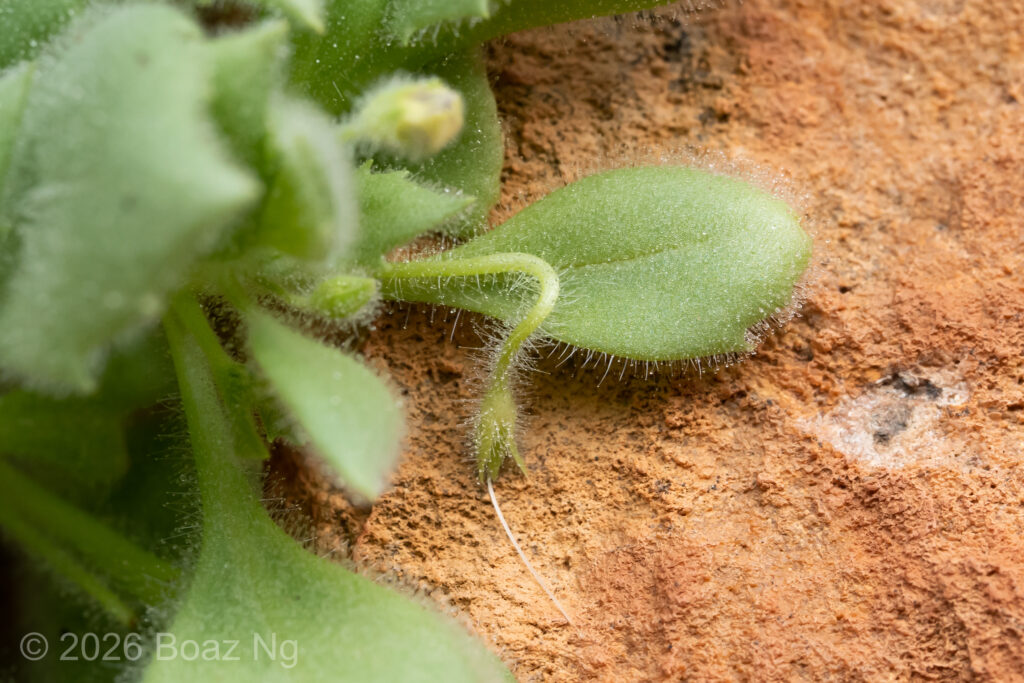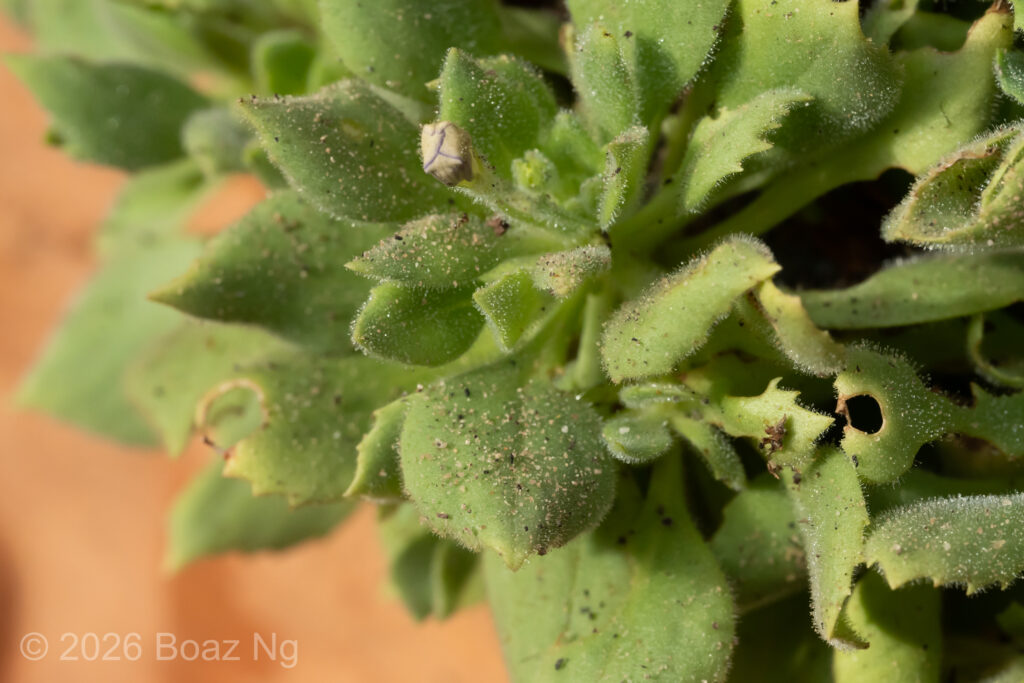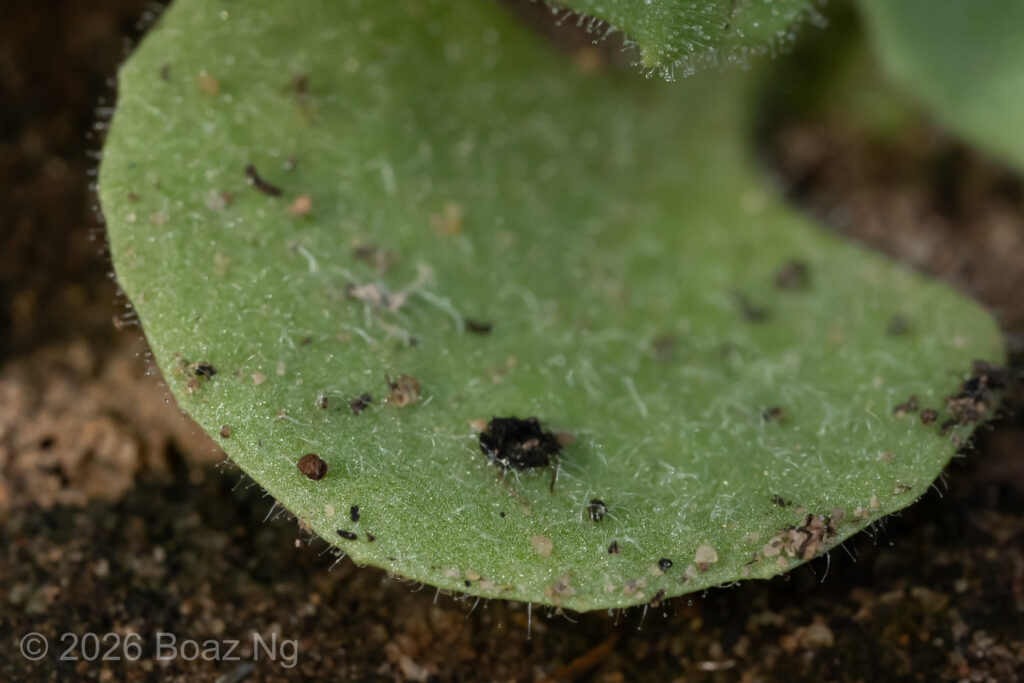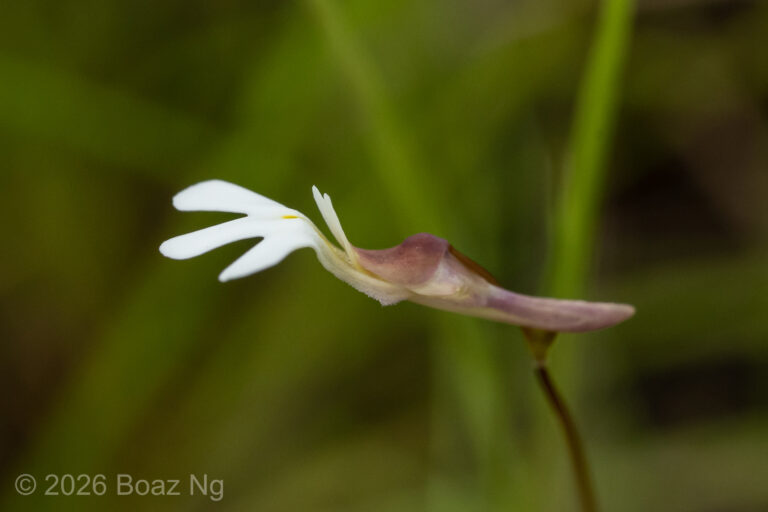
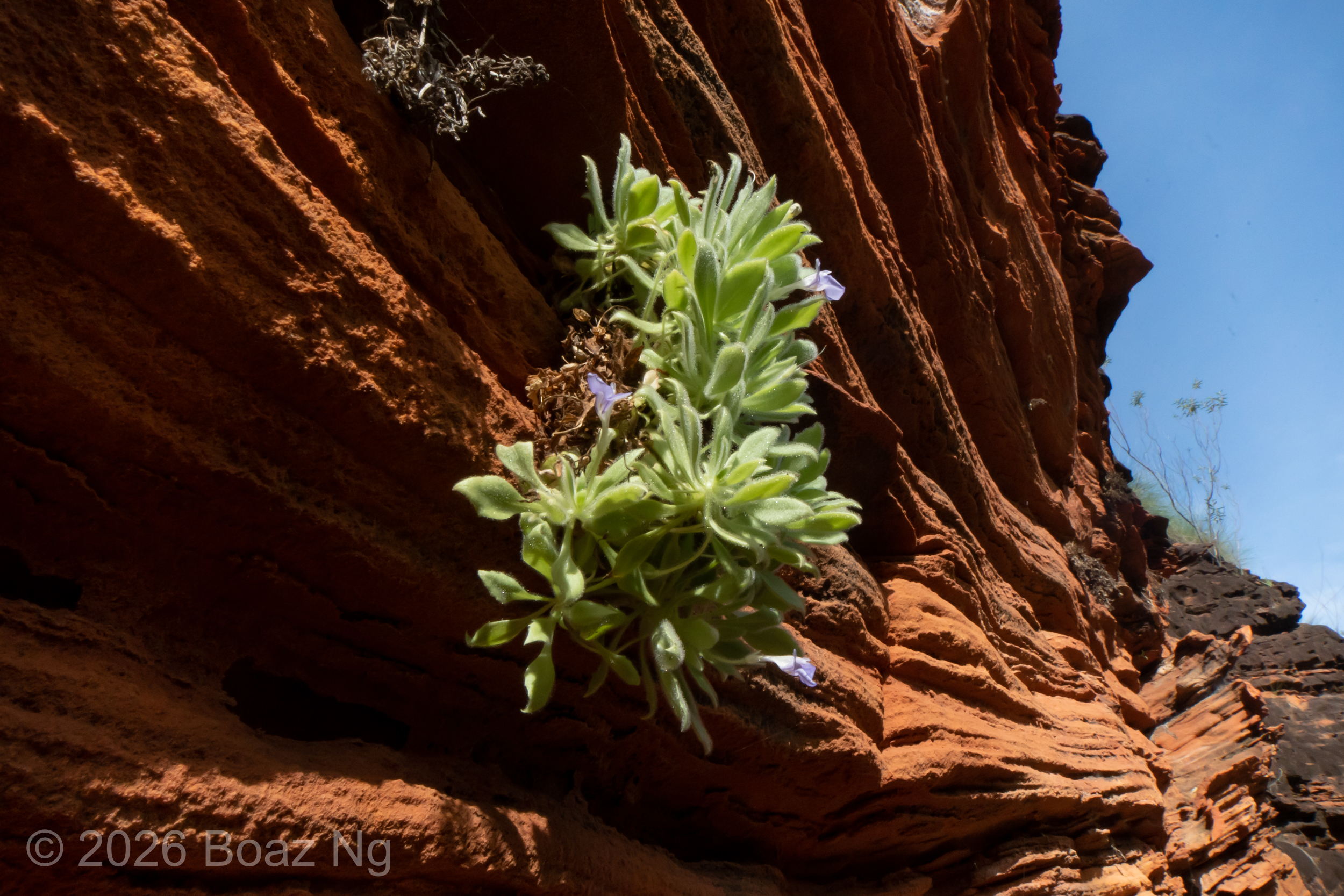
Vandellia cleistandra (Lindernia cleistandra) is a glandular plant that is suspected of being carnivorous. All vegetative parts of the plant are covered with stalked glands that secrete a sticky glue. In nature, small bugs are frequently caught by the leaves. This has led to the hypothesis that the species is carnivorous.
My observations of wild plants show that most specimens had a few insects stuck on the leaves (along with non-specific debris dislodged from the rock face that could easily be mistaken for a dead insect). However, I could find no evidence that the plants were digesting the insects. The most common bug that was caught was small gnats, the majority of which died with extended legs that raised the body far from the leaf surface. The tentacles of the plant do not collapse or bend to bring the insects in contact with the leaf surface. Most insects did have a shrivelled appearance, but I feel that this is attributable to the heat. Of course, its possible that the plant absorbs nutrients through its tentacles, but in the absence of evidence, I would conclude that the species is not carnivorous. Some plants had chunks of leaves missing from insect damage, so the glandular leaves could be a defence mechanism to discourage bugs from eating them.
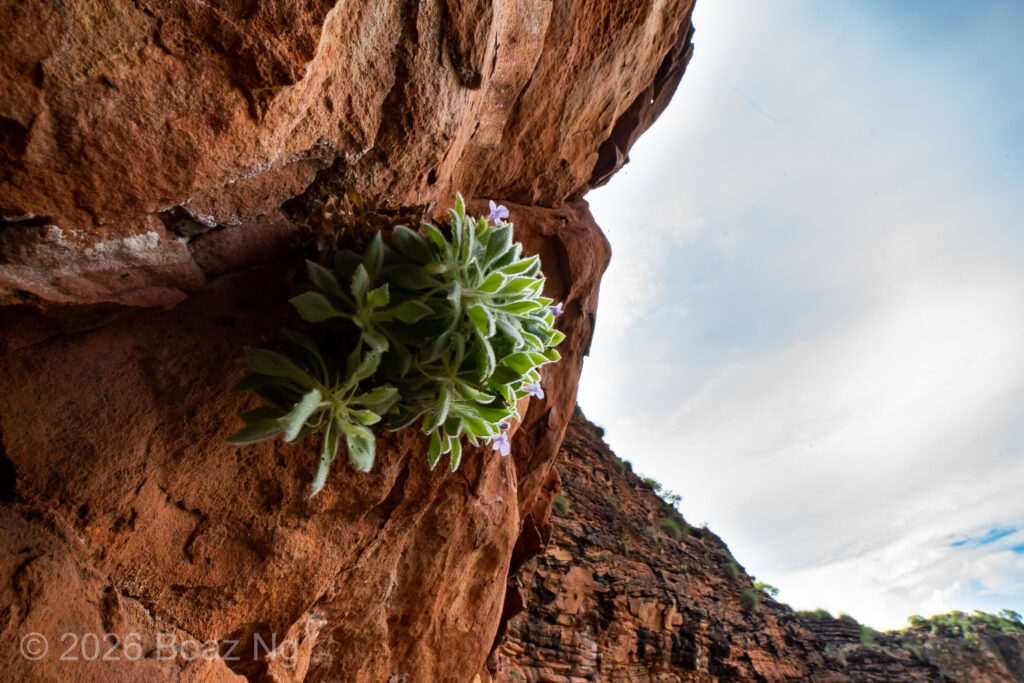
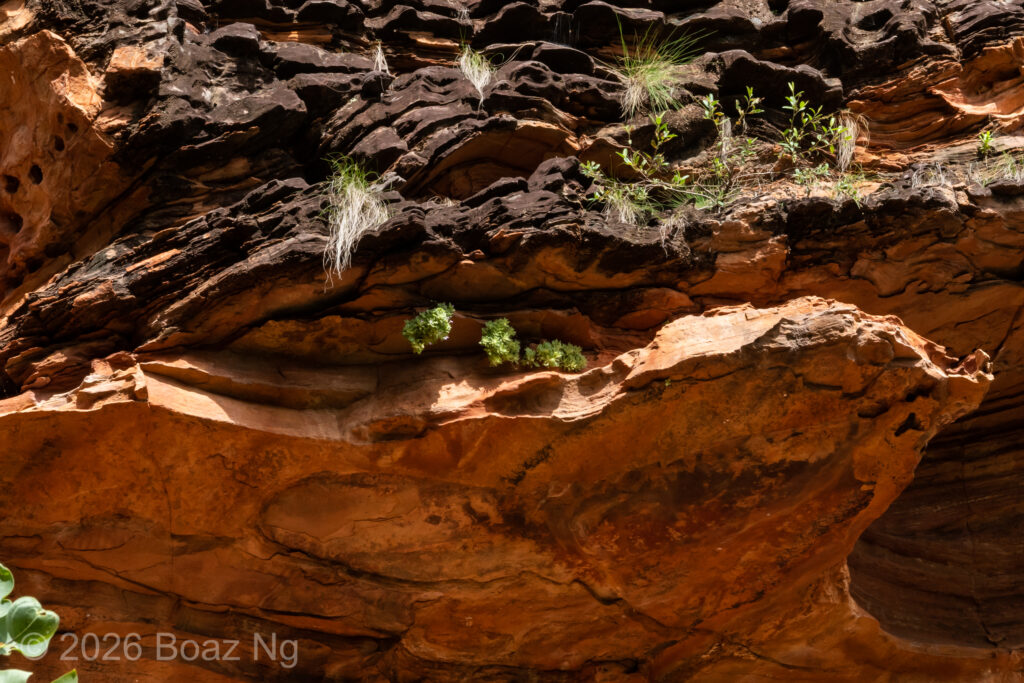
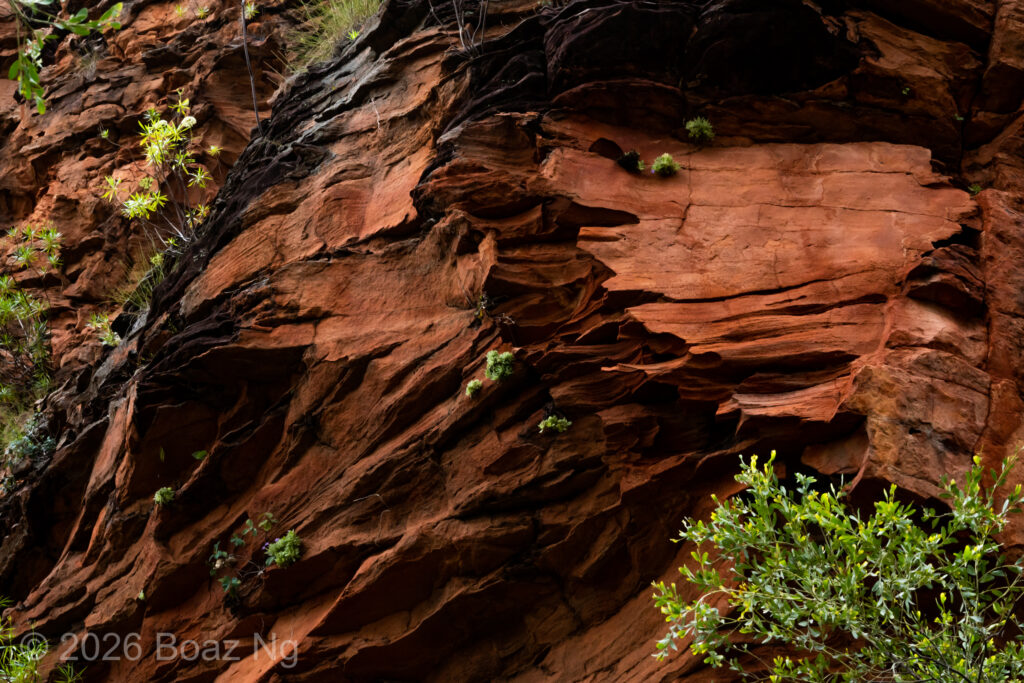
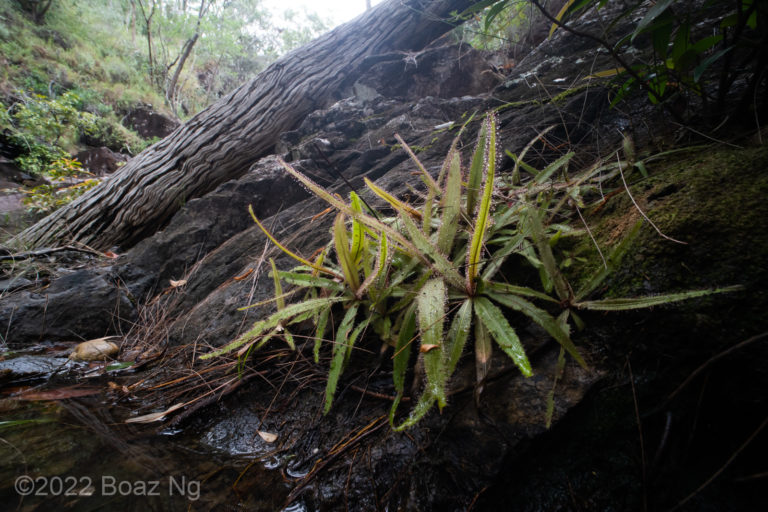
Vandellia cleistandra is best known from the Kimberley region of Northern Australia, where it grows in crevices in sandstone cliff faces. The plants presumably extract water from seepages emanating from the rock cracks. This habitat gets very hot, especially when the sun is out but the almost daily rains in the wet season keep the substrate damp. The specific niche is not shared with known carnivorous plants, although they can be common in wet soaks on the ground nearby. The flower scapes of the species are interesting in that they bend backwards after setting fruit to bring the seeds in contact with the cliff face.