Utricularia cowiei is an annual terrestrial bladderwort endemic to the Kimberley region of Western Australia.
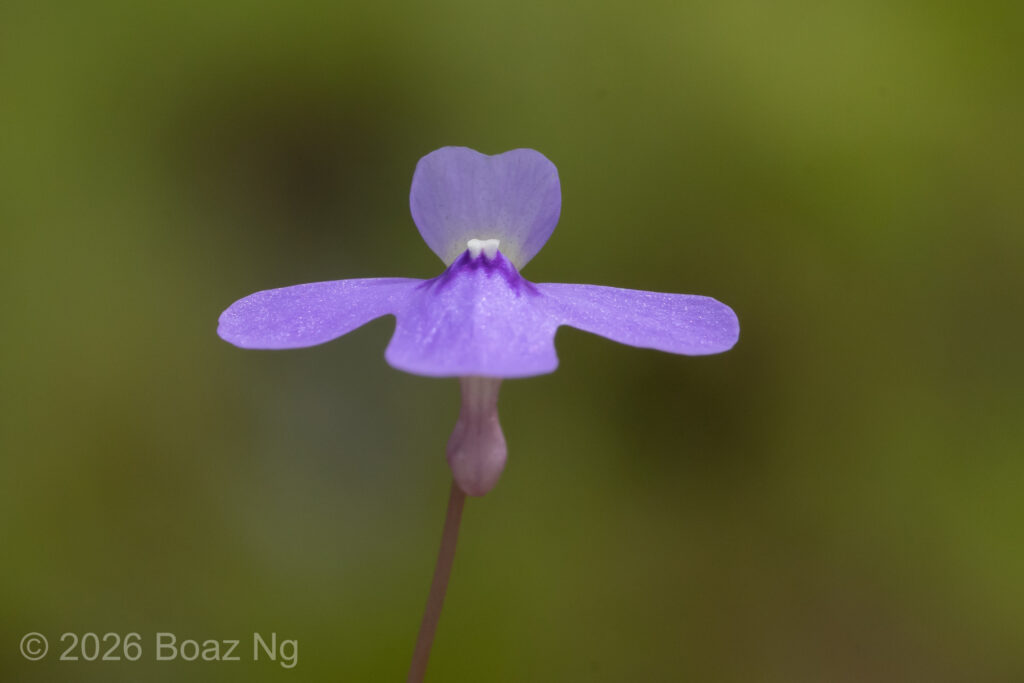
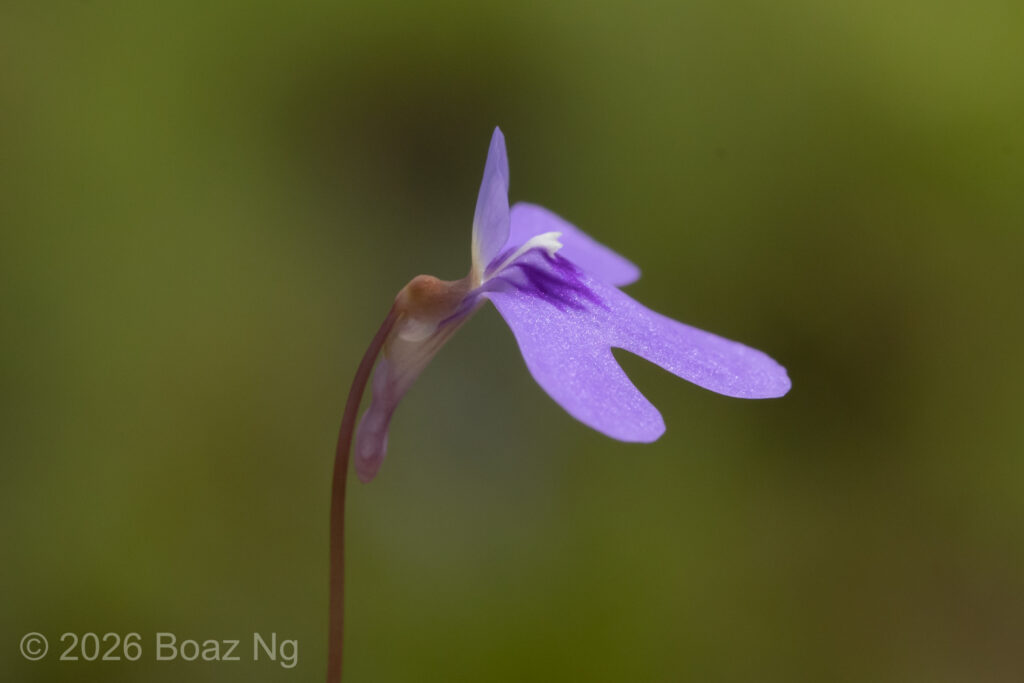
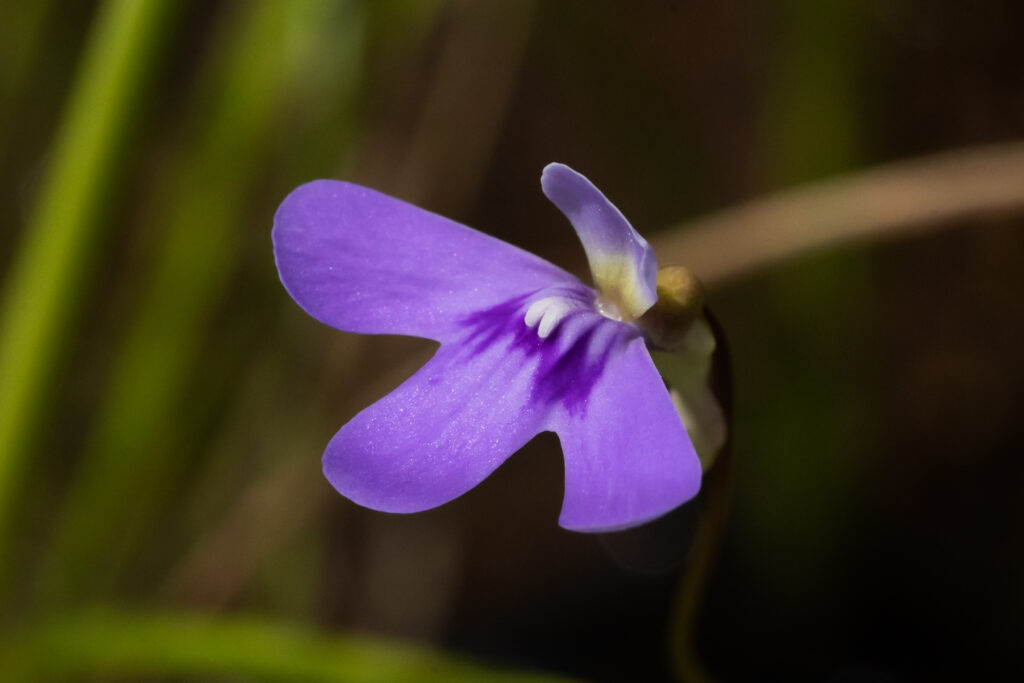
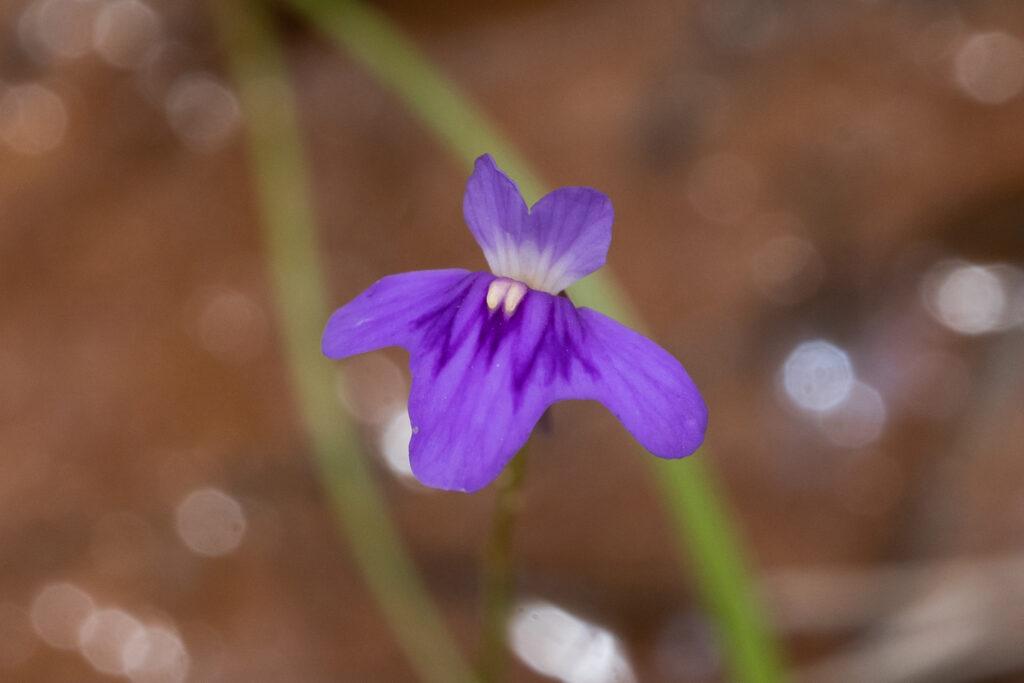
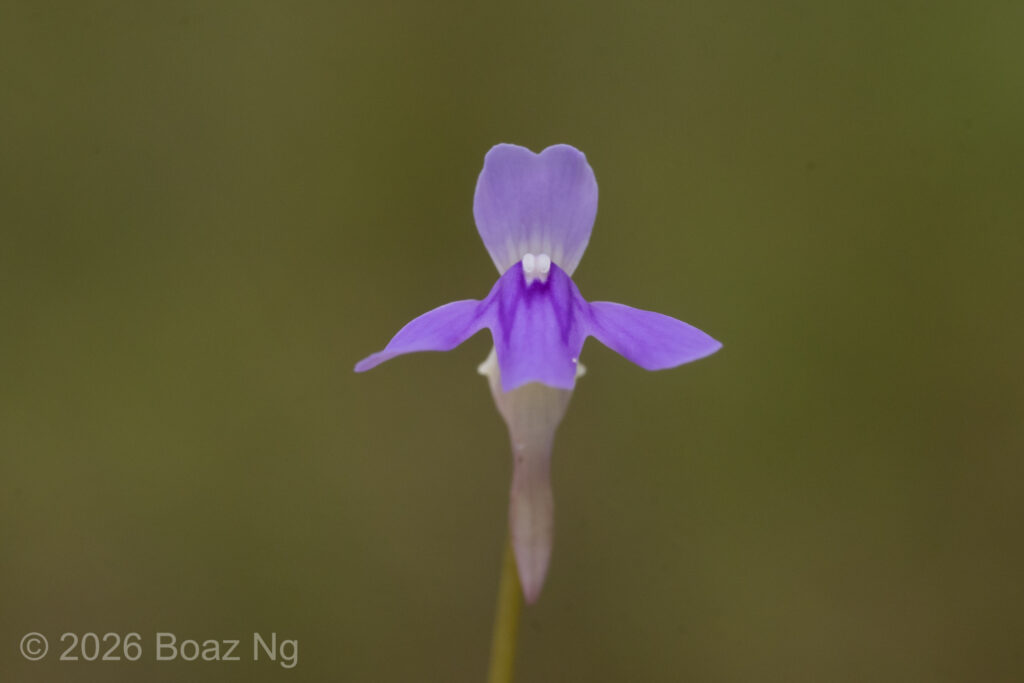
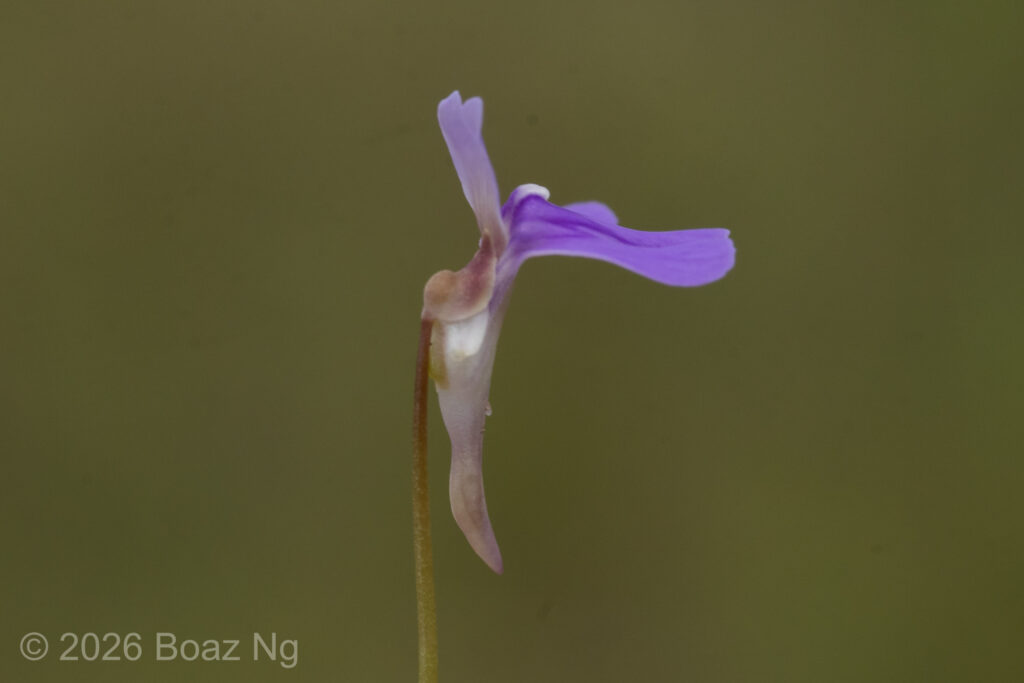
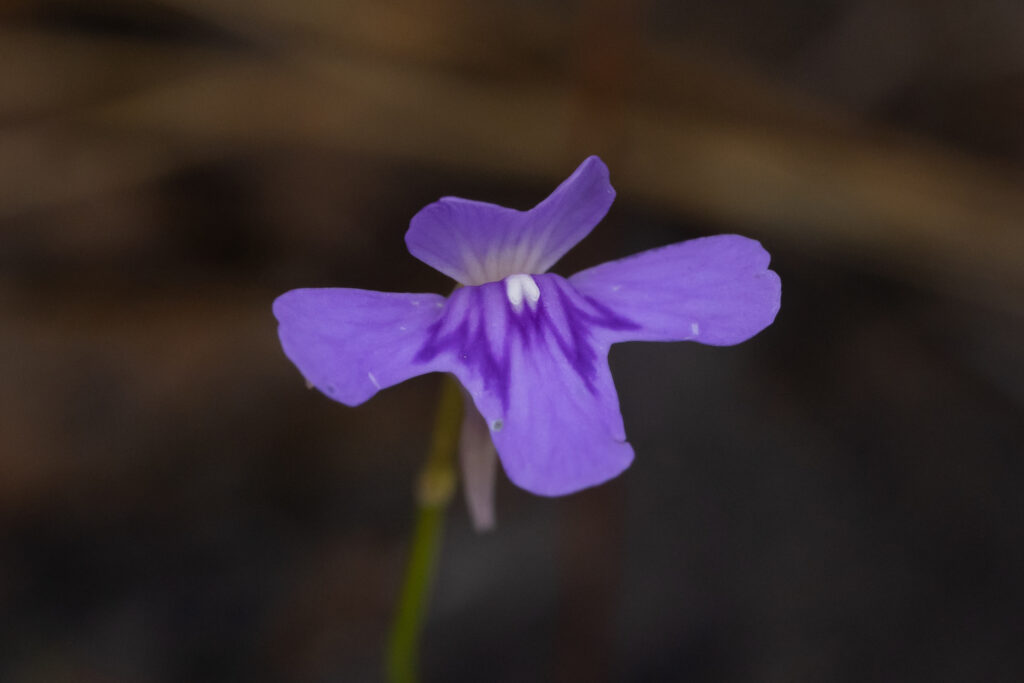
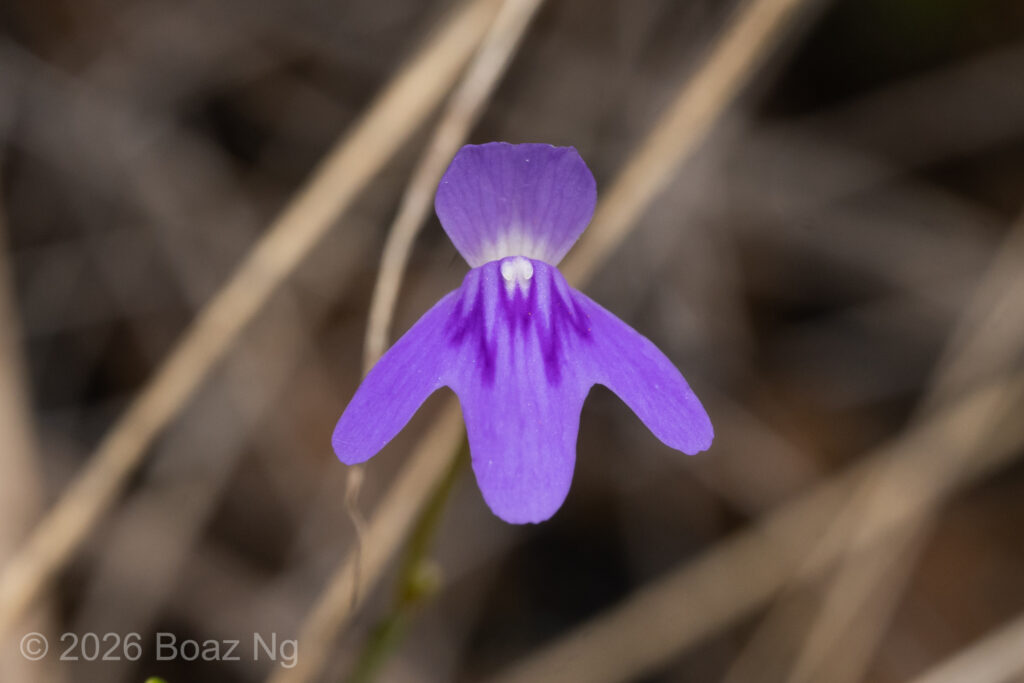
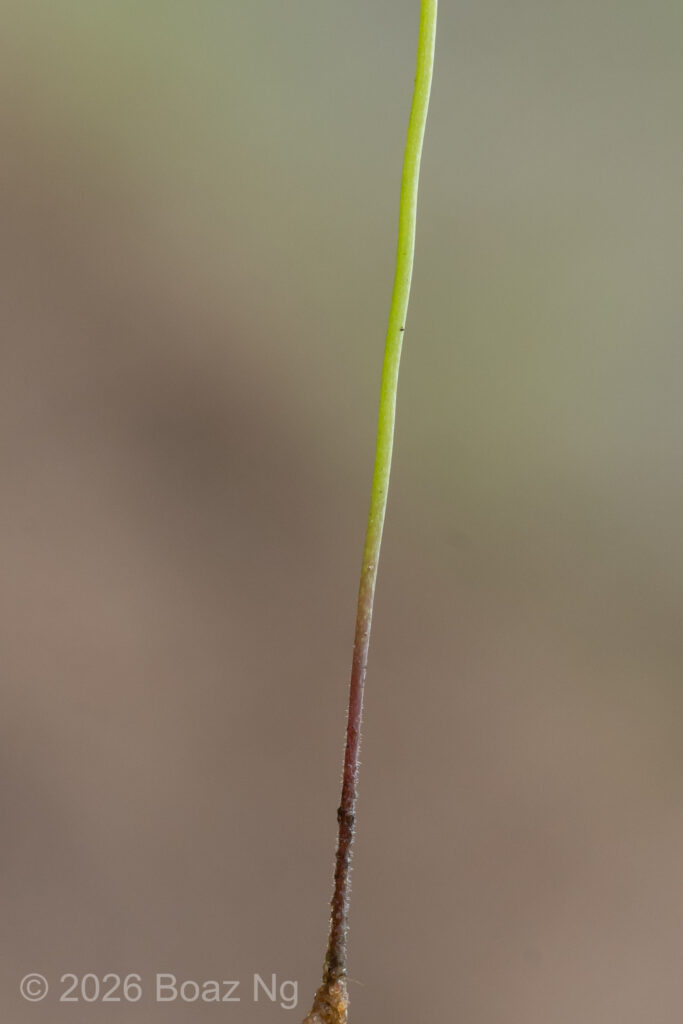
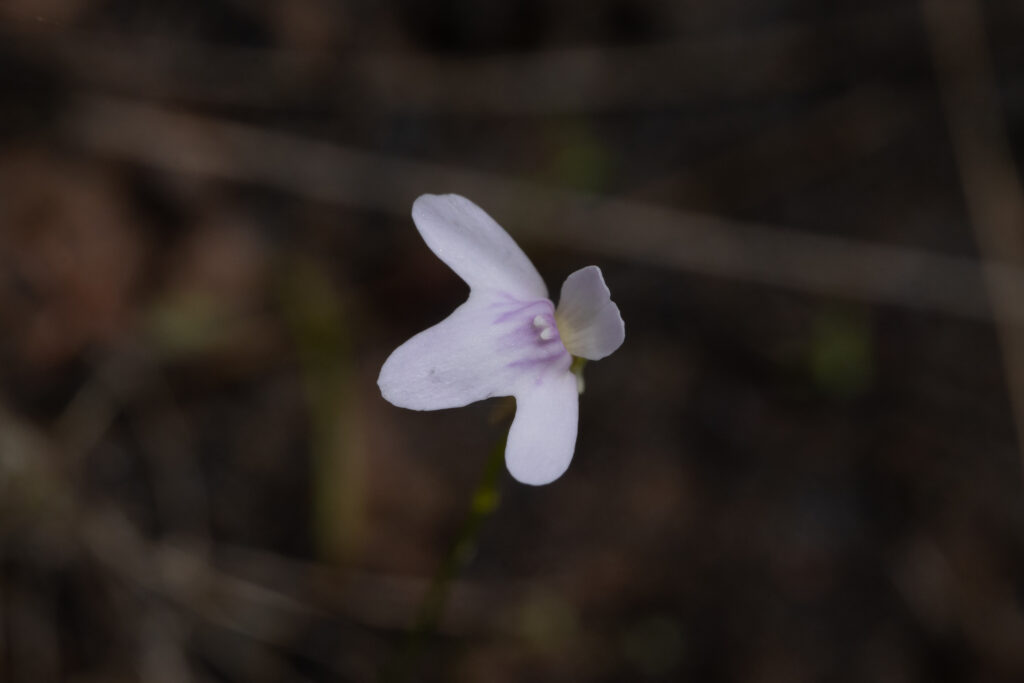
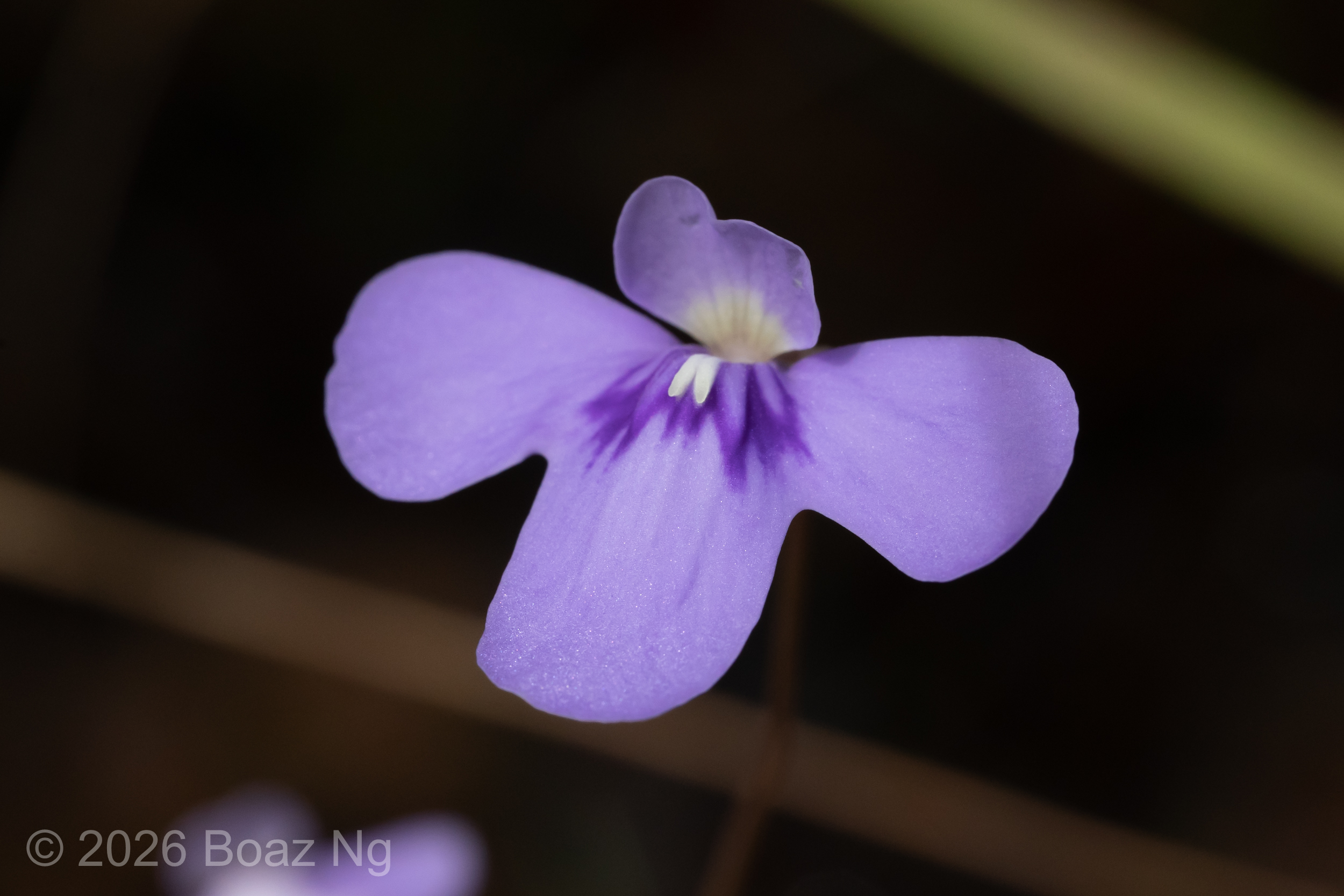
Utricularia cowiei is a small plant with scapes that reach around 10 cm tall and flowers around 1.5cm wide. The lower corolla lip has three distinct lobes that are broad and deeply divided. The upper corolla lip is upright and flared, with a shallow notch at the margin. The palate has a set of raised, white tooth-like projections. The corolla spur is narrow with a blunt tip, and is somewhat constricted near the middle. The base of the flower stem is hispid. The flower is coloured light purple, with darker streaks near the palate. The base of the upper corolla lip is cream in colour.
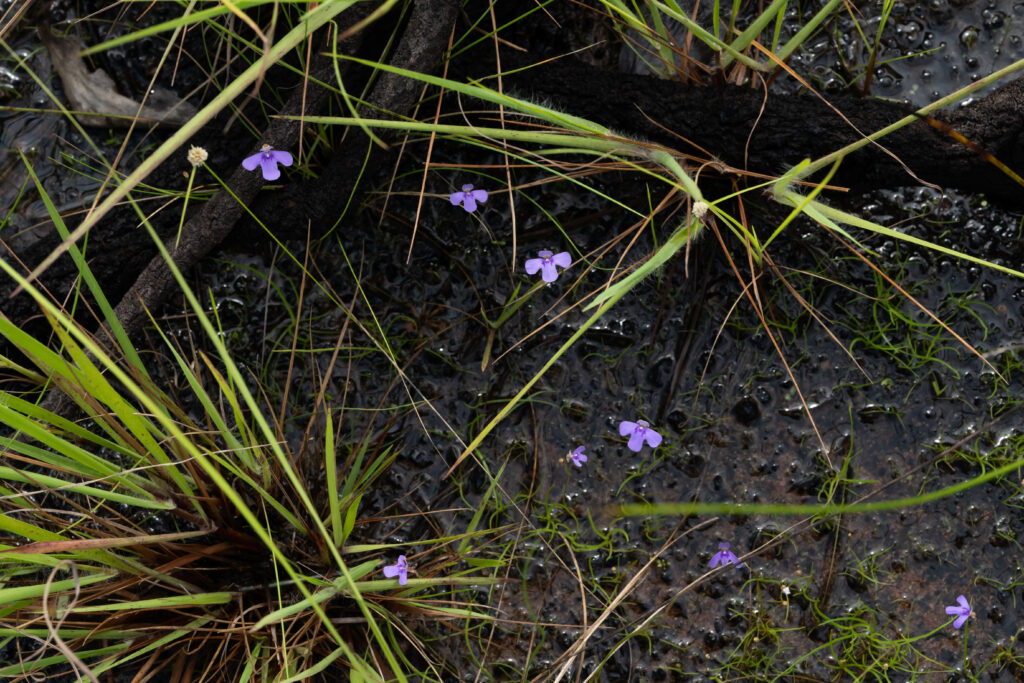
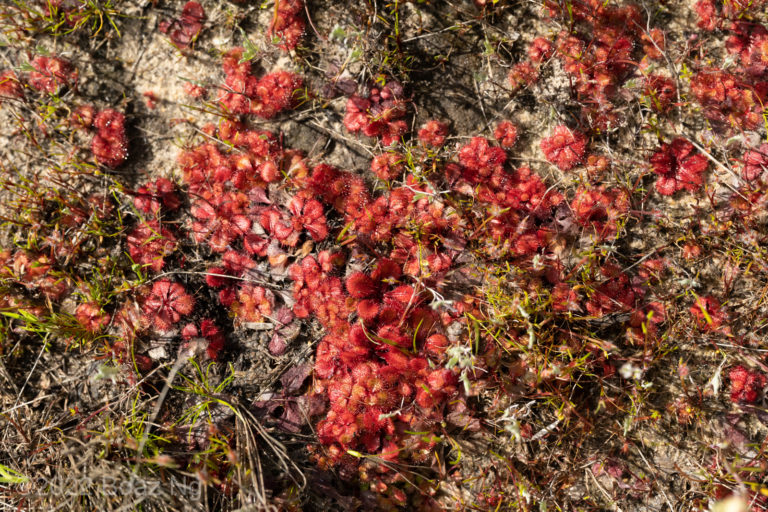
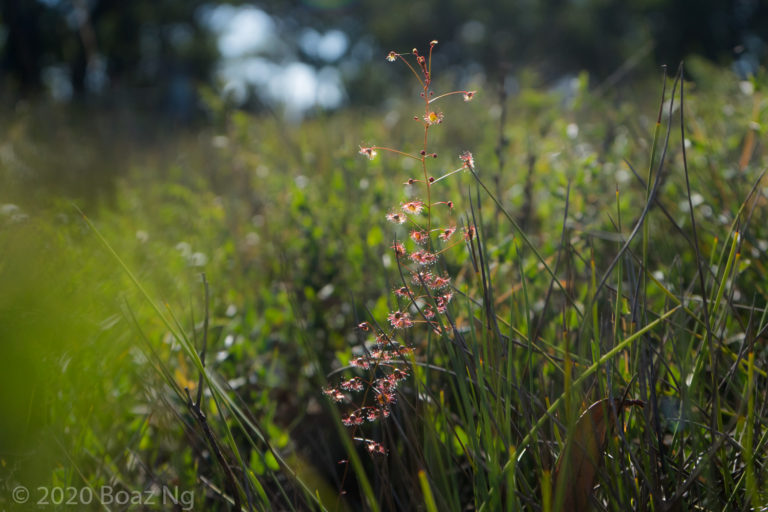
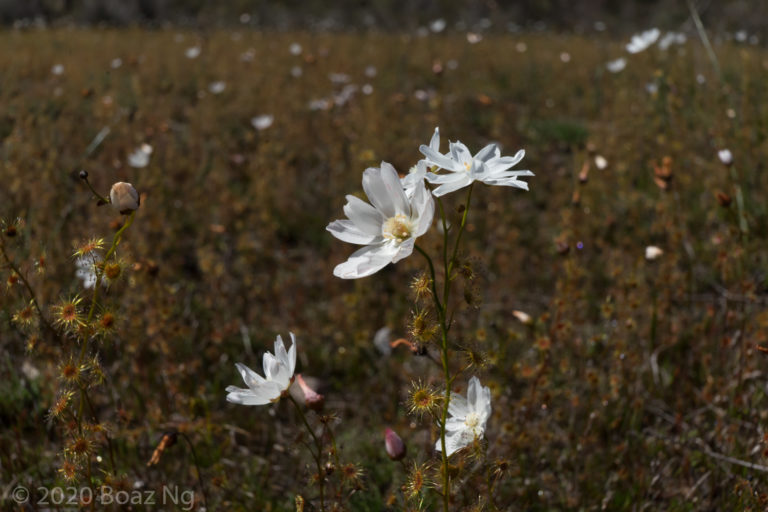
The species is found in the North Kimberley region where it is sporadically known from a few locations. I observed the species near Kununurra and Kalumburu during March. At Kununurra, it grew in the sandy, seasonally wet margins of shallow swamps. At Kalumburu, it grew in seasonally wet grassfields draining into a small creek. The species most likely grows as an annual, dying when its habitat dries in the dry season.
Utricularia cowiei is closely related to the other species of the Utricularia lasiocaulis complex. It most closely resembles Utricularia disjuncta, which shares a similar shape and colour scheme. U. cowiei is distinguished by its flared and broad upper corolla lip that is purple with a cream base (smaller in U. disjuncta and coloured white). Within its range, it is somewhat similar to U. tridactyla. U. cowiei has broader lower corolla lobes and a flared upper corolla lip (U. tridactyla has thinner corolla lobes and a smaller upper corolla lip).